The Broadband Divide: How Telecom Giants Pocketed Billions in Public Subsidies and Left Rural and Poor America Offline

In 2009, the federal government handed major telecommunications companies $7.2 billion through the American Recovery and Reinvestment Act with a clear mandate: bring high-speed internet to underserved communities across America. Fourteen years later, the Federal Communications Commission estimates that 39% of rural Americans and 27% of Americans living on Tribal lands still lack access to reliable broadband. Meanwhile, Verizon reported $22.7 billion in revenue for the third quarter of 2023 alone, and Comcast's annual profits exceed $15 billion.
This isn't a story of market failure—it's a story of market capture. For decades, telecom giants have successfully lobbied for public subsidies, regulatory favors, and monopolistic protections while systematically failing to deliver on their promises to connect America. The result is a digital divide that mirrors and reinforces every other form of inequality in American society, from educational opportunity to healthcare access to democratic participation.
The Subsidy Shell Game
Since 1996, American taxpayers have provided telecommunications companies with more than $400 billion in subsidies, tax breaks, and regulatory gifts, according to research by telecommunications policy expert Bruce Kushnick. This includes direct grants, accelerated depreciation schedules, access to public rights-of-way at below-market rates, and the assignment of valuable spectrum licenses for nominal fees.
The quid pro quo was supposed to be universal broadband access. Instead, companies have consistently redirected these public investments toward profitable urban and suburban markets while leaving rural and low-income communities behind. When Verizon received billions in public subsidies to expand its FiOS fiber network, it focused on wealthy neighborhoods in New York and Washington D.C. while abandoning promised buildouts in working-class areas of Philadelphia and Baltimore.
The pattern is consistent across the industry. AT&T accepted $428 million in federal Connect America Fund subsidies to bring broadband to rural areas, then failed to meet its buildout commitments in multiple states. The company's response? Request more money and fewer oversight requirements.
The Monopoly Protection Racket
The telecommunications industry's capture of federal policy extends far beyond direct subsidies. Through decades of lobbying and regulatory capture, major carriers have constructed a system that protects their regional monopolies while blocking competition and innovation.
The dismantling of net neutrality protections under the Trump administration wasn't just about internet speeds—it was about cementing corporate control over information flow. Without net neutrality rules, internet service providers can throttle access to websites, prioritize their own content, and charge extra fees for faster access to essential services. This creates a two-tiered internet where your ability to access information, education, and economic opportunity depends on your ability to pay premium rates to corporate gatekeepers.
Meanwhile, these same companies have systematically blocked municipal broadband initiatives that could provide real competition. In 19 states, largely through industry lobbying, laws restrict or prohibit local governments from building their own broadband networks, even when private companies have failed to serve their communities adequately.
The Digital Divide as Democratic Crisis
The consequences of America's broadband failure extend far beyond inconvenience. In 2023, reliable internet access is essential infrastructure for full participation in American society. Students without home broadband fall behind in school; workers without reliable internet access are excluded from the growing remote economy; patients can't access telehealth services; citizens struggle to engage with government services increasingly moved online.
This digital divide maps almost perfectly onto existing inequalities. According to the Pew Research Center, 15% of households with incomes below $30,000 lack home broadband access, compared to just 2% of households earning over $100,000. Rural Americans are three times more likely to lack broadband access than urban residents. The gap is even starker for communities of color: 21% of Black adults and 17% of Hispanic adults lack home broadband, compared to 13% of white adults.
During the COVID-19 pandemic, these disparities became life-and-death issues. Students without home internet fell months behind in school. Workers without broadband lost jobs they could have performed remotely. Elderly patients couldn't access telehealth services. The "homework gap" became a national crisis, with an estimated 15-17 million K-12 students lacking adequate internet access for remote learning.
The Public Option That Works
Despite industry claims that government-provided internet service would be inefficient and expensive, municipal broadband networks consistently outperform private providers on both price and service quality. Chattanooga, Tennessee's publicly-owned electric utility offers gigabit fiber internet for $70 per month—less than half what residents pay for inferior service from Comcast in nearby markets.
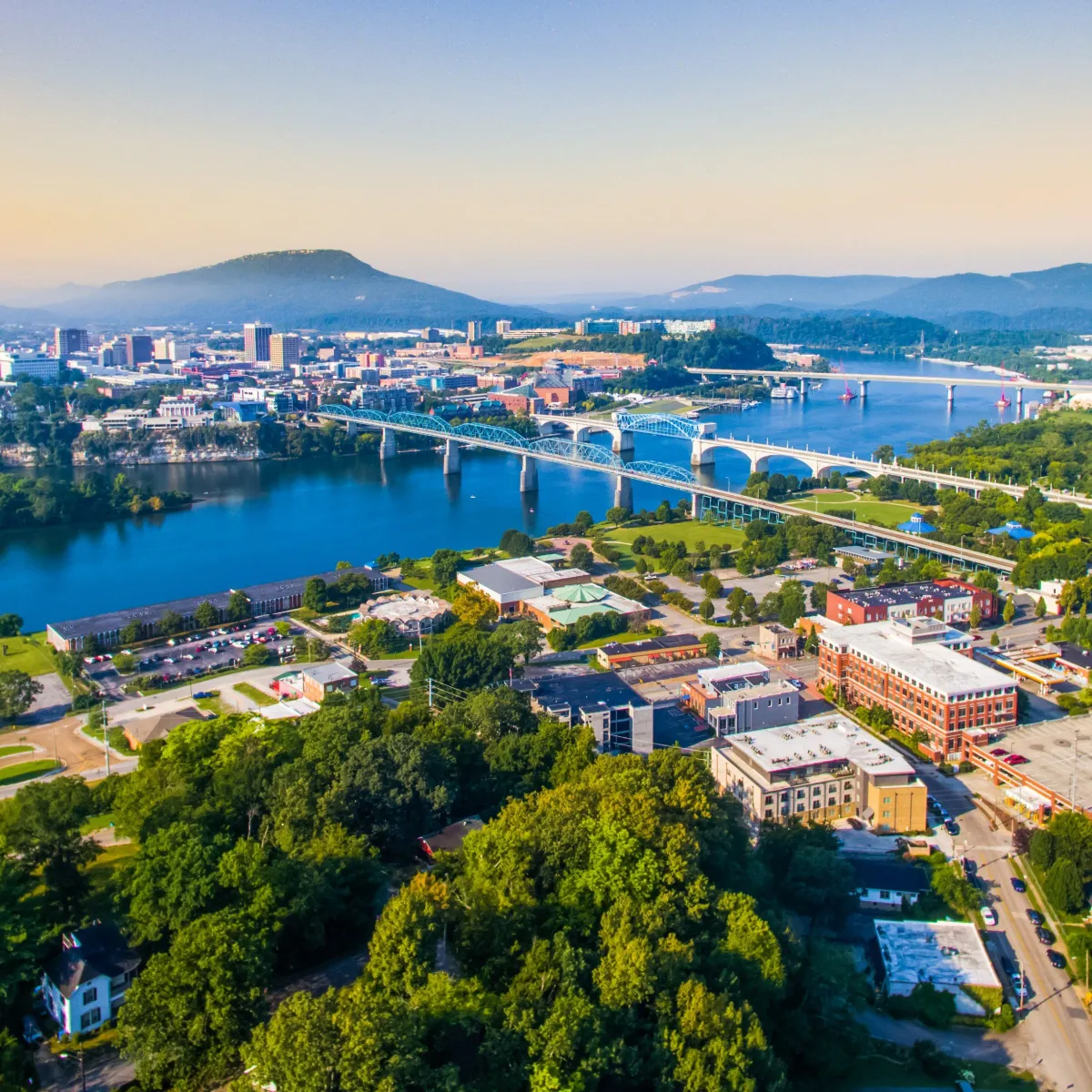 Photo: Chattanooga, Tennessee, via i.pinimg.com
The economic impact has been transformative. Chattanooga's municipal broadband network has attracted technology companies, enabled new businesses, and generated an estimated $2.69 billion in economic development. The city's unemployment rate dropped from 7.8% to 3.1% in the decade following the network's launch.
Similar success stories exist across the country. Wilson, North Carolina's municipal network provides faster, cheaper service than incumbent providers while generating revenue for the city. Lafayette, Louisiana's publicly-owned fiber network survived Hurricane Ida better than private infrastructure and has kept internet prices low for residents.
 Photo: Lafayette, Louisiana, via d17lhmgcxruq5y.cloudfront.net
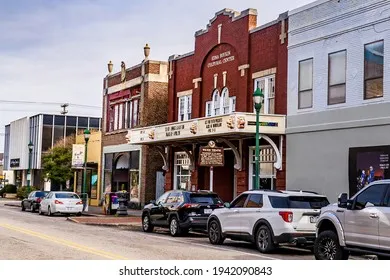 Photo: Wilson, North Carolina, via image.shutterstock.com
Corporate Counterattack
Faced with evidence that public broadband works better and costs less, the telecommunications industry has doubled down on legislative and legal strategies to block competition. Industry groups like the American Legislative Exchange Council have drafted model legislation prohibiting municipal broadband, often using misleading claims about government overreach and fiscal responsibility.
The industry's preferred talking point—that government shouldn't compete with private business—rings hollow when those same private businesses have failed to serve their communities despite receiving massive public subsidies. Verizon and AT&T aren't being asked to compete on a level playing field; they've been given billions in taxpayer money and regulatory advantages that would make genuine competition impossible.
The Infrastructure We Deserve
The Biden administration's Infrastructure Investment and Jobs Act allocated $65 billion for broadband expansion, representing the largest federal investment in internet infrastructure since the 1990s. But without fundamental changes to how these funds are distributed and monitored, there's little reason to expect different results from previous subsidy programs.
Real broadband equity requires treating internet access as a public utility, not a luxury commodity. This means public ownership of essential infrastructure, strong net neutrality protections, and an end to the regulatory capture that has allowed private companies to profit from public investment while failing to serve the public interest.
The technology to connect every American household already exists. The public has already paid for it, multiple times over. What we lack is the political will to challenge corporate control over essential infrastructure and build the democratic, publicly-accountable internet system that Americans deserve.
In the 21st century, internet access isn't a luxury—it's a prerequisite for economic opportunity, educational advancement, and democratic participation. Until we treat it as such, America's digital divide will continue to deepen every other form of inequality in our society.