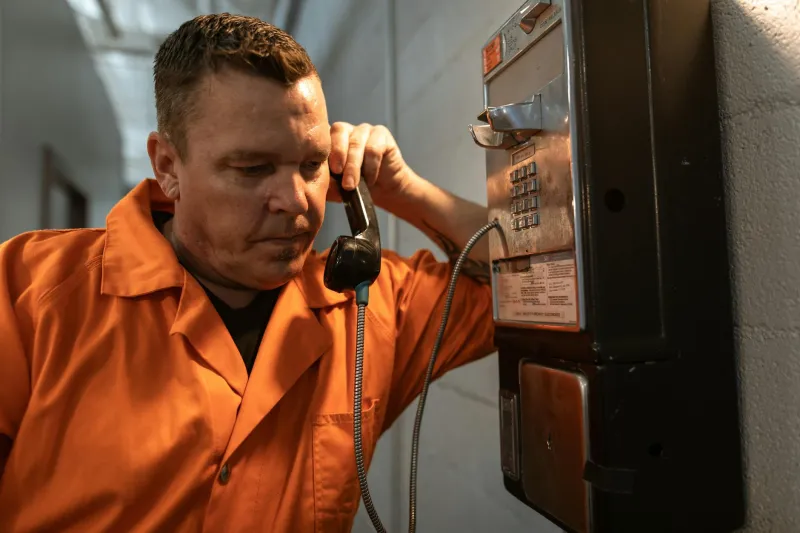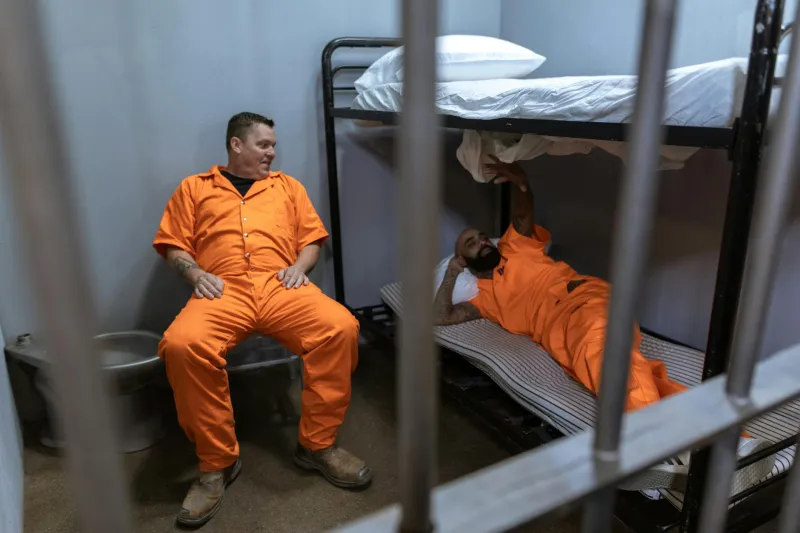
When CoreCivic executives gathered for their quarterly earnings call last month, they had good news for investors: occupancy rates at their facilities remained stable at 89%, well above the minimum thresholds required by their government contracts. What they didn't mention was that this "success" represents approximately 80,000 human beings whose continued imprisonment is literally necessary for the company's profit margins.
This is the grotesque reality of America's private prison industry, where corporations like CoreCivic and GEO Group have engineered a business model that requires human suffering to generate shareholder returns. These companies don't just run prisons—they've systematically corrupted the entire justice system to ensure a steady supply of bodies to fill their beds.
The Occupancy Guarantee Scandal
The mechanics of this corruption are surprisingly straightforward. Private prison companies negotiate contracts with federal agencies and state governments that include "occupancy guarantees"—clauses requiring taxpayers to pay for a minimum number of prisoners, typically 80-95% capacity, regardless of actual incarceration needs. If crime drops or sentencing reforms reduce prison populations, taxpayers still foot the bill for empty beds.
These guarantees exist in contracts across at least 15 states, representing billions in taxpayer dollars flowing to private companies even when their facilities sit partially empty. In Arizona, taxpayers have paid millions for unused prison beds while the state simultaneously cut funding for education and healthcare. The message is clear: corporate profits matter more than public need.
The Lobbying Machine
To protect these lucrative arrangements, private prison companies have built one of Washington's most effective lobbying operations. CoreCivic and GEO Group together spent over $2.8 million on federal lobbying in 2023 alone, targeting lawmakers who oversee criminal justice policy and immigration enforcement. Their lobbying priorities consistently oppose sentencing reform, drug decriminalization, and alternatives to incarceration—policies that would reduce their customer base.
The companies' political action committees have distributed hundreds of thousands in campaign contributions to key members of Congress, particularly those sitting on judiciary and homeland security committees. This investment pays dividends: every time comprehensive criminal justice reform gains momentum, it mysteriously stalls in committee or gets stripped of provisions that would reduce incarceration rates.
The Revolving Door
Perhaps more insidious than direct lobbying is the industry's cultivation of a revolving door between corporate boardrooms and government offices. Former Bureau of Prisons officials regularly land executive positions at private prison companies, while former industry executives find themselves appointed to oversight positions within the very agencies that regulate their former employers.
This revolving door creates a permanent class of officials whose financial interests align with maintaining high incarceration rates. When former GEO Group executives help craft immigration detention policies, or when former CoreCivic officials oversee federal prison contracts, the line between public service and private profit disappears entirely.
Human Cost of Corporate Greed
Behind these financial arrangements are real people whose lives have been commodified. Private prisons consistently show higher rates of violence, medical neglect, and understaffing compared to public facilities. Cost-cutting measures designed to maximize profits often translate to reduced programming, inadequate mental health services, and substandard conditions that increase recidivism rates.
The demographics tell a predictable story: private prisons disproportionately house people of color and immigrants, populations with less political power to resist this exploitation. Black Americans make up 40% of private prison populations despite representing just 13% of the general population. This isn't coincidence—it's the logical outcome of a system that profits from the systematic oppression of marginalized communities.
The Immigration Goldmine
The private prison industry found a particularly lucrative niche in immigration detention, where due process protections are weaker and public oversight is minimal. GEO Group and CoreCivic operate the majority of ICE detention facilities, housing asylum seekers and undocumented immigrants under conditions that would be illegal in criminal facilities.
These companies have actively lobbied for policies that increase immigration enforcement, including mandatory detention requirements that force ICE to keep people locked up even when they pose no flight risk or public safety threat. The result is a detention system that costs taxpayers $3 billion annually while generating massive profits for private companies.
Breaking the Cycle
Some states have begun rejecting this model. California, Nevada, and New York have banned private prisons entirely, while the Biden administration ended federal contracts with private prison operators—though immigration detention remains largely privatized.
These reforms face fierce industry resistance. When states move to eliminate private prisons, companies often sue for breach of contract, demanding taxpayers compensate them for lost future profits from human incarceration. The audacity is breathtaking: corporations claiming a legal right to profit from human suffering.
The Path Forward
Real reform requires more than ending contracts—it demands dismantling the entire ecosystem that makes mass incarceration profitable. This means eliminating occupancy guarantees, banning corporate campaign contributions from prison companies, and implementing strict cooling-off periods for officials moving between government and industry.
Congress should pass legislation prohibiting all forms of private incarceration, including immigration detention. States should follow California's lead and ban private prison contracts entirely. Most importantly, we must recognize that any system allowing corporations to profit from human incarceration is fundamentally incompatible with justice.
The private prison industry has turned America's justice system into a profit extraction mechanism, where human freedom becomes a commodity to be bought and sold. Until we break this cycle, every reform effort will face an industry with billions of reasons to ensure it fails—and the carceral carousel will keep spinning.