The Gilded Age Redux
Across America, food banks report record demand while Congress debates cutting SNAP benefits. Homeless shelters overflow as public housing waitlists stretch for decades. Medical debt fundraisers proliferate on GoFundMe while Medicare expansion stalls in state legislatures. This isn't coincidence—it's design. The United States has constructed a parallel universe where private charity substitutes for public rights, creating what amounts to a nonprofit industrial complex that serves donors more effectively than the desperate people it claims to help.
The numbers tell a stark story. American charitable giving reached $499.33 billion in 2022, according to Giving USA, while federal spending on means-tested programs like TANF, housing assistance, and nutrition aid has stagnated or declined in real terms over decades. Tax expenditures for charitable deductions—essentially public subsidies for private giving—cost the Treasury approximately $65 billion annually, with the largest benefits flowing to the wealthiest donors who itemize deductions.
Democracy for Sale, One Donation at a Time
From a progressive standpoint, this system represents a fundamental assault on democratic governance. When billionaires like Bill Gates can direct global health policy through foundation spending, or when the Koch network shapes criminal justice reform through strategic philanthropy, we've effectively privatized public policy. These donors face no elections, answer to no constituents, and operate with minimal transparency requirements.
 Photo: Bill Gates, via andsimple.co
Consider the Gates Foundation's influence over American education policy. Through strategic grants totaling over $5 billion since 2000, the foundation has promoted charter school expansion, standardized testing regimes, and teacher evaluation systems that many educators and researchers oppose. Yet Gates was never elected to a school board, never taught in a classroom, and faces no democratic accountability for policies affecting millions of children.
The tax implications are equally troubling. When Amazon founder Jeff Bezos donates $10 billion to his Bezos Earth Fund, he receives a charitable deduction worth roughly $3.7 billion in avoided taxes—money that would otherwise fund roads, schools, and social services. Essentially, taxpayers subsidize billionaires' policy preferences while public programs starve.
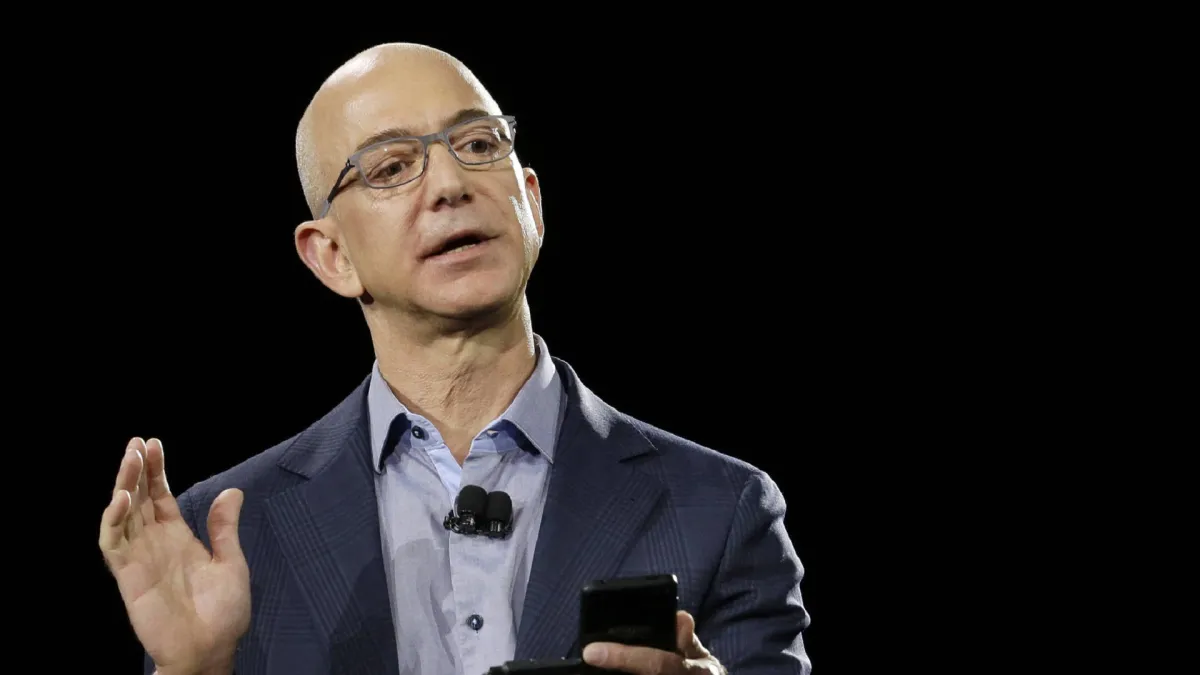 Photo: Jeff Bezos, via wallpapers.com
The Accountability Deficit
Critics argue that private charity is more efficient than government programs, pointing to lower administrative costs and faster response times. This misses the fundamental point: efficiency isn't the primary virtue of public programs—accountability is. When FEMA responds to disasters, when Social Security sends checks, when Medicaid covers hospital bills, these actions represent collective decisions made through democratic processes, however imperfect.
Private foundations operate under different rules entirely. The Bill & Melinda Gates Foundation, with an endowment exceeding $75 billion, is required to spend only 5% of its assets annually—a threshold so low it allows perpetual growth while providing minimal public benefit. Meanwhile, foundation boards typically consist of donors and their associates, creating closed loops of influence insulated from public input.
The human cost of this system is measurable. Research by political scientist Rob Reich at Stanford University demonstrates how charitable tax deductions effectively redistribute wealth upward, since high-income donors receive larger tax benefits per dollar donated. A millionaire giving $10,000 receives a tax benefit worth $3,700, while a middle-class donor giving the same amount might save only $2,200—assuming they itemize deductions at all.
The Moral Hazard of Privatized Compassion
More insidiously, the nonprofit industrial complex creates moral hazard for lawmakers. Why fund robust public housing when pointing to Habitat for Humanity provides political cover? Why expand Medicaid when hospital charity care programs exist? This dynamic allows politicians to appear compassionate while systematically defunding the public sector.
The COVID-19 pandemic exposed these contradictions starkly. While mutual aid networks and food banks received widespread media praise, millions of Americans faced eviction, medical bankruptcy, and hunger—problems that robust public programs could have prevented entirely. Private charity, by definition, cannot guarantee universal coverage or consistent standards.
Research by sociologist Megan Tobias Neely reveals how elite philanthropy often reinforces existing power structures rather than challenging them. Wealthy donors gravitate toward causes that reflect their values and experiences—arts institutions, elite universities, environmental conservation—while structural issues like poverty, systemic racism, and labor rights receive proportionally less attention.
Beyond the Tax Haven
The international context makes America's charity obsession even more troubling. European social democracies achieve better health outcomes, lower poverty rates, and higher social mobility through robust public programs funded by progressive taxation. Their citizens don't depend on billionaire benevolence for basic needs because they've maintained the principle that certain services are rights, not privileges.
Germany's healthcare system, for instance, covers virtually all residents through a combination of public insurance and regulated private options. Germans don't organize charity drives for insulin or crowd-fund cancer treatments because their democratic institutions guarantee healthcare access. The result: better health outcomes at lower per-capita costs than the American system.
The Path Forward
Reforming this system requires confronting uncomfortable truths about American inequality and democratic governance. Progressive tax reform could eliminate charitable deductions for the wealthy while funding expanded public programs. Stricter foundation payout requirements could force idle capital into immediate use. Most importantly, reviving the principle that certain needs—housing, healthcare, education—are public goods requiring democratic oversight, not private charity.
The choice is stark: continue allowing billionaires to play government with tax-subsidized foundations, or rebuild public institutions capable of guaranteeing rights rather than depending on charity. True compassion isn't privatized—it's democratized, accountable, and universal.