Death Shouldn't Be a Sales Opportunity: How the Funeral Industry Turns Grief Into Profit

Photo: New America, CC BY 3.0, via Wikimedia Commons
The Price of Saying Goodbye
Somewhere in America today, a family is sitting across a desk from a funeral director, red-eyed and exhausted, being walked through a pricing menu they have never seen before, for services they do not fully understand, at a moment when their capacity for negotiation is precisely zero. They will spend, on average, between $7,000 and $12,000 before they leave that room — and a significant portion of what they spend will have been shaped not by their needs, but by the revenue targets of a private equity firm headquartered in a city they have never visited.
The American death-care industry generates approximately $20 billion annually, according to the National Funeral Directors Association. It is an industry that has undergone dramatic consolidation over the past two decades, with large corporate chains and private equity-backed consolidators quietly acquiring independent funeral homes across the country. Service Corporation International, the largest funeral home operator in North America, operates more than 1,900 funeral homes and 500 cemeteries across the United States and Canada. Private equity firms including Park Lawn Corporation and InvoCare have expanded aggressively into the sector. The pitch to investors is straightforward: death is recession-proof, demand is inelastic, and customers arrive at the point of sale in a state of profound psychological vulnerability.
That last point is not a side effect. It is the business model.
The Regulatory Framework That Wasn't
The Federal Trade Commission's Funeral Rule, enacted in 1984 and last meaningfully updated in 1994, requires funeral homes to provide itemized price lists upon request and prohibits certain deceptive practices. On paper, it sounds like a reasonable consumer protection. In practice, it is a relic that the industry has learned to navigate with ease.
The Rule does not require funeral homes to post prices online. It does not cap fees or require price comparisons. It does not address the psychological tactics — time pressure, guilt-laden upselling, the strategic display of premium caskets at eye level while budget options are stored in poorly lit back rooms — that shape purchasing decisions at the point of grief. A 2023 investigation by the Funeral Consumers Alliance found that price transparency compliance among funeral homes was inconsistent, with many failing to provide complete itemized lists without explicit consumer prompting.
The FTC has been aware of these gaps for years. A regulatory review of the Funeral Rule that began in 2011 produced a report in 2012 recommending online price disclosure. More than a decade later, no binding update has been issued. The funeral lobby — organized primarily through the National Funeral Directors Association and state-level trade groups — has been effective at slowing reform, arguing that online price lists would strip away the personalized service that families deserve. What families actually deserve, and what the industry actually delivers, are different conversations.
The Inequality of Death
The burden of predatory death-care pricing is not distributed evenly. Research consistently shows that Black families in the United States spend significantly more on funerals than white families of comparable income — a gap driven by cultural traditions around homegoing services, targeted marketing by funeral homes in Black communities, and the historical lack of consumer education and price comparison resources in those communities. A 2021 study published in Omega: Journal of Death and Dying found that funeral expenditures among Black Americans averaged roughly 40 percent higher than among white Americans at similar income levels.
Low-income families of all backgrounds face a specific trap: many lack life insurance sufficient to cover funeral costs, turning to high-interest financing arrangements — sometimes offered directly by funeral homes or their corporate parents — that extend the financial wound of loss for months or years. Prepaid funeral plans, marketed aggressively to elderly and low-income consumers, carry their own risks: money paid into prepaid contracts has disappeared when funeral homes closed or were sold, leaving families with neither funds nor services.
The strongest counterargument from the industry is that funeral directors provide a genuine and emotionally demanding professional service, and that pricing reflects real costs: labor, facilities, refrigeration, transportation, regulatory compliance. This is not wrong. Funeral service is skilled work, and independent family-owned funeral homes — still a meaningful portion of the market — often operate on thin margins with genuine community commitment. The problem is not the profession. The problem is what happens when private equity acquires that profession and optimizes it for extraction rather than service.
What Other Countries Do Differently
The comparison to peer nations is instructive and uncomfortable. In the United Kingdom, the Competition and Markets Authority launched a major investigation into the funeral industry in 2019, ultimately requiring funeral homes to display prices on their websites and in their premises, and establishing a new regulatory framework for pre-paid funeral plans. Average funeral costs in the UK remain significantly lower than in the United States, despite comparable labor and facility costs.
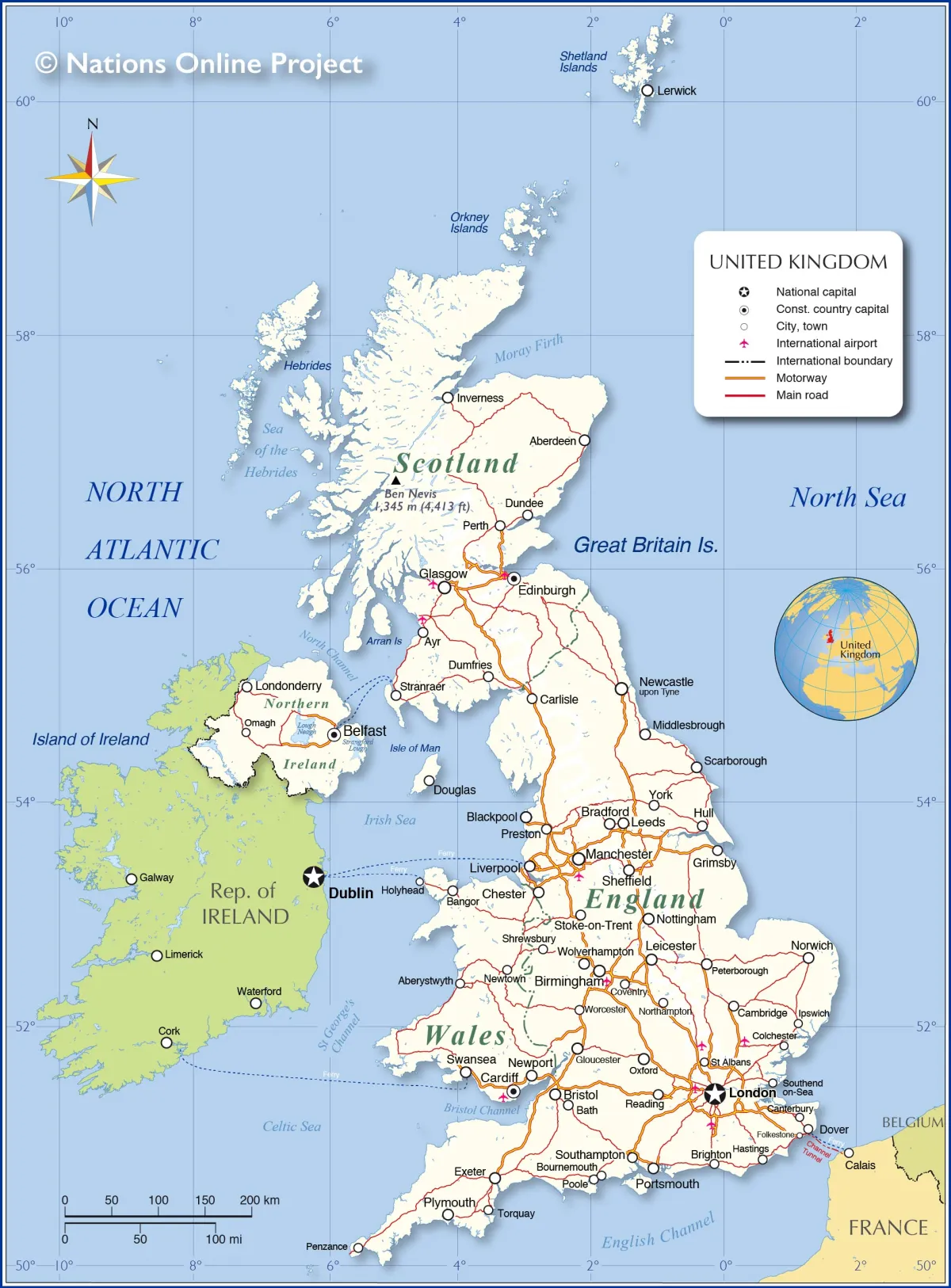 Photo: United Kingdom, via www.nationsonline.org
In Germany, funeral costs are partially covered by statutory health insurance for qualifying individuals, and pricing regulations vary by state. In Japan, cooperative funeral associations provide low-cost alternatives that have historically constrained predatory pricing across the sector. None of these systems are perfect, but all of them reflect a policy judgment that the death-care market — precisely because it operates at a moment of profound human vulnerability — requires more than ordinary consumer protection.
The United States has made the opposite judgment: that grief is a market opportunity like any other, and that families are consumers who should comparison-shop their way through bereavement.
The Human Cost of Market Logic
Behind the aggregate data are specific human experiences. Families who buried a parent on a credit card that took three years to pay off. Elderly widows who signed prepaid contracts and discovered the funeral home had been sold to a chain that honored the contract only partially. Children of immigrants who spent money they did not have because the cultural expectation of a proper farewell felt non-negotiable, and no one told them they had options.
These are not edge cases. They are the predictable output of a market designed to function in the absence of informed consent, operating on customers who are, almost by definition, in no condition to be informed consumers.
The FTC has the authority to update the Funeral Rule without congressional action. Consumer Financial Protection Bureau oversight of funeral financing products is legally plausible. State attorneys general have enforcement tools they have largely left unused. The policy solutions are not mysterious. What is missing is the political will to treat the dignity of death as a public interest rather than a private revenue stream.
In a country that claims to value human dignity, allowing the death-care industry to monetize grief without meaningful accountability is not a market outcome — it is a moral failure with a very specific set of authors.