Designed to Drown: The Student Loan Servicing Industry Profits Most When Borrowers Can't Escape
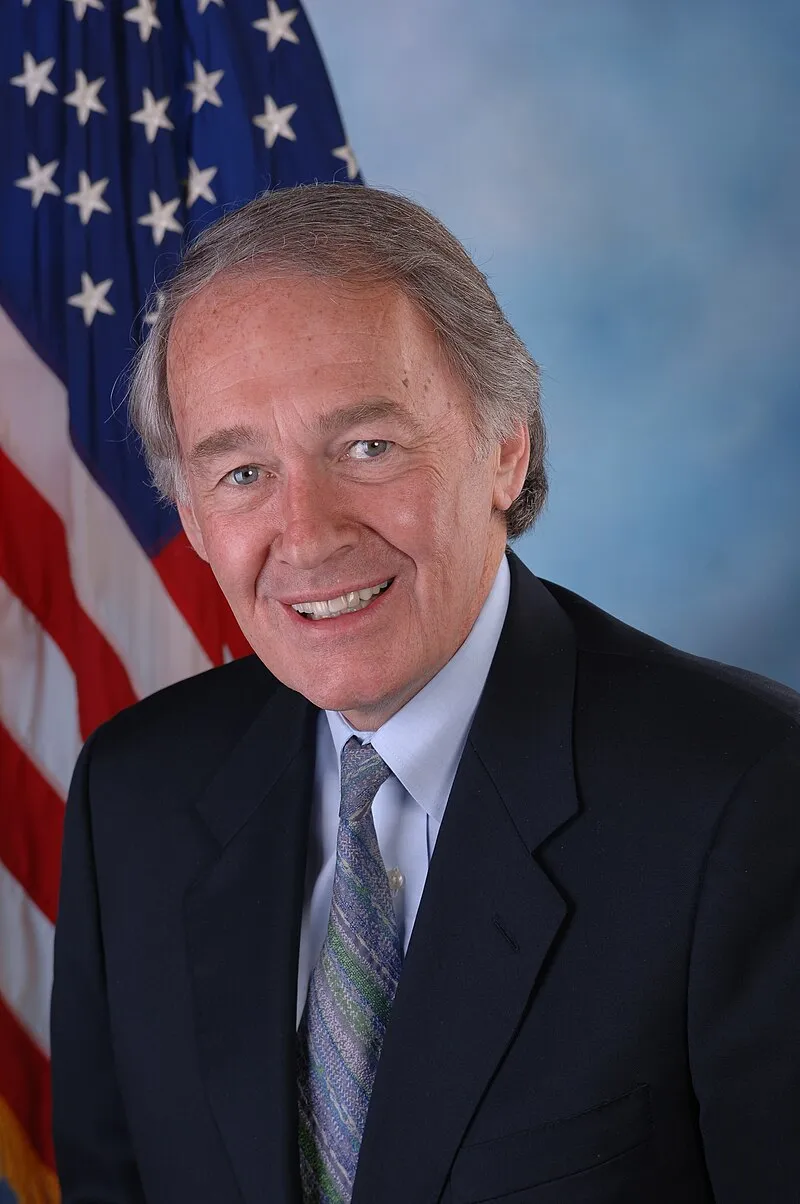
Photo of Ed Markey, via Wikimedia Commons
In January 2017, the Consumer Financial Protection Bureau filed suit against Navient — at the time the largest student loan servicer in the United States, managing more than $300 billion in federal and private loans — alleging that the company had systematically failed borrowers at every stage of the repayment process. The CFPB's complaint described a company that steered struggling borrowers into forbearance rather than income-driven repayment plans, misapplied payments in ways that inflated interest, and provided borrowers with information that was, in the agency's words, "false and misleading."
Navient denied wrongdoing for years. In 2022, it settled with 39 state attorneys general for $1.85 billion — canceling approximately $1.7 billion in private loan debt for some borrowers and providing $95 million in restitution payments. That settlement covered only a fraction of the borrowers harmed. And it did nothing to change the underlying incentive structure that made the misconduct profitable in the first place.
The Architecture of Administrative Failure
To understand how loan servicing becomes a mechanism of harm rather than assistance, it helps to understand the financial logic. Servicers are paid per-account fees by the federal government — a flat rate for each loan they manage. Under this structure, the cheapest borrower to service is one who makes regular payments without asking questions. The most expensive borrower to service is one who calls frequently, requests detailed account reviews, or seeks enrollment in complex repayment programs like Public Service Loan Forgiveness (PSLF), which requires meticulous tracking of qualifying payments over ten years.
The perverse result: it is financially rational for a servicer to give borrowers inaccurate or incomplete information about income-driven repayment and forgiveness programs, because those programs require more administrative work and, in the case of forgiveness, eventually eliminate the account from the servicer's portfolio entirely. Forgiveness is, quite literally, lost revenue.
This is not speculation. The CFPB, the Government Accountability Office, and the Department of Education's own inspector general have each documented cases in which servicers provided incorrect information about PSLF eligibility, failed to process paperwork correctly, and allowed borrowers to make years of non-qualifying payments without correction. A 2018 GAO report found that of 29,000 PSLF applications processed at that point, only 96 had been approved — a 0.3 percent approval rate. Many of the rejections traced directly to servicer error or miscommunication.
The Black Borrower Penalty
No analysis of the student debt crisis is complete without confronting its racial dimension. According to the National Center for Education Statistics, Black college graduates owe an average of $25,000 more in student loan debt than their white peers four years after graduation — a gap driven by lower family wealth, higher reliance on loans rather than savings, and greater likelihood of attending schools with weaker employment outcomes relative to their cost.
The Brookings Institution has documented that while Black and white students borrow at similar rates upon entering college, Black borrowers are significantly more likely to see their balances grow after graduation rather than shrink, because lower starting wages make it harder to outpace interest accumulation. For many Black borrowers, the student loan system functions not as a ladder to the middle class but as a financial anchor — one that grows heavier with every administrative error, every misapplied payment, every month spent in forbearance that generates interest rather than credit toward forgiveness.
When the Biden administration attempted to provide broad-based debt relief in 2022 — up to $20,000 in cancellation for Pell Grant recipients — the Supreme Court struck it down in June 2023 in Biden v. Nebraska, ruling 6-3 that the administration had exceeded its statutory authority. The decision was a legal and political blow, but it also revealed the depth of the structural problem: the servicing industry had spent years lobbying against forgiveness policies, and the legal architecture for large-scale relief remained contested. Meanwhile, borrowers continued accruing interest.
Forbearance as a Trap
One of the most insidious tools in the servicer's kit is forbearance — a pause on required payments that sounds like relief but functions, over time, as a debt multiplier. Unlike income-driven repayment plans, which cap monthly payments based on earnings and count toward forgiveness timelines, forbearance simply suspends payments while interest continues to accumulate. A borrower who spends two years in forbearance when they qualified for an income-driven plan may emerge with a balance thousands of dollars higher and zero additional credit toward forgiveness.
The CFPB's case against Navient alleged that the company systematically pushed borrowers toward forbearance rather than income-driven plans because forbearance was faster to process — reducing servicer labor costs — while generating additional interest that increased the outstanding balance and, eventually, the servicer's ongoing fee base. The company disputed this characterization. But the pattern of behavior the CFPB documented was consistent across millions of accounts and years of operation.
The Department of Education under the Biden administration attempted to address this through an "account adjustment" initiative that retroactively credited certain forbearance periods toward income-driven repayment forgiveness timelines. It was a meaningful corrective measure — but it required borrowers to navigate yet another administrative process, and its implementation has been uneven.
The Oversight Gap
Federal oversight of student loan servicers has historically been inadequate for a simple structural reason: the Department of Education, which contracts with servicers, is also responsible for holding them accountable. When servicer performance is poor, the department's preferred response has been renegotiation and contract renewal rather than termination — because transitioning millions of borrower accounts to a new servicer is logistically complex and politically risky.
This creates a situation in which servicers face limited competitive pressure, minimal financial penalties for misconduct, and a federal client that is structurally reluctant to enforce consequences. The CFPB's authority to supervise student loan servicers was itself contested for years — the Trump administration moved to limit that authority, and the servicing industry has consistently lobbied against expanded federal oversight.
What Accountability Would Actually Look Like
Reforming the student loan servicing industry does not require eliminating private contractors — though a strong case exists for returning servicing to a fully public function. At minimum, it requires restructuring the fee model so that servicers are compensated for successful outcomes — borrowers enrolled in appropriate repayment plans, forgiveness timelines correctly tracked, accounts resolved — rather than for account volume. It requires real financial penalties, not settlements that amount to a fraction of annual profits. And it requires restoring and expanding CFPB authority to supervise servicers with the same rigor applied to mortgage lenders.
The student debt crisis is often framed as a consequence of rising tuition and individual borrowing decisions. That framing is incomplete. A significant portion of the suffering embedded in the $1.7 trillion federal student loan portfolio is not the product of bad choices by borrowers — it is the product of a servicing system that was designed, structured, and incentivized to fail them.
That is not a bug. For the companies collecting fees on every account, every month, with every passing year of accumulated interest, it has always been the point.