Five Rules That Moved the Goalposts: How State Election Law Is Quietly Reshaping the Next Election
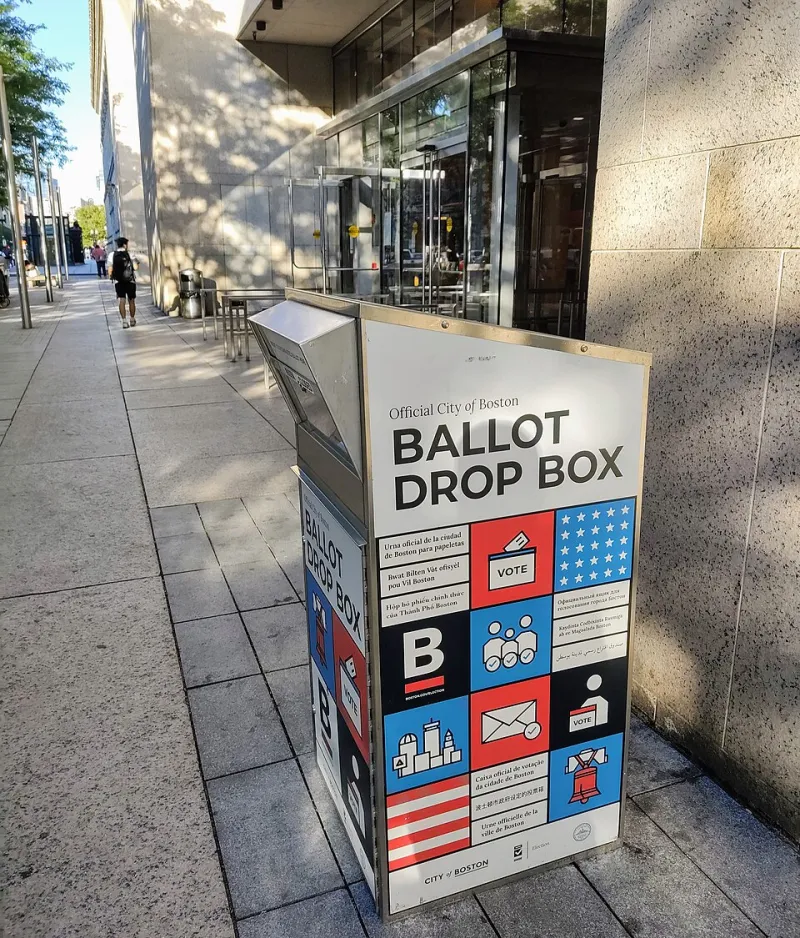
Photo: Whoisjohngalt, CC BY-SA 4.0, via Wikimedia Commons
Presidential campaigns get the headlines, but elections are won and lost in the administrative plumbing — the registration rolls, the ballot deadlines, the county offices deciding how the count proceeds. Since the 2022 midterms, state legislatures across the country have continued a sustained rewriting of that plumbing, with the Brennan Center for Justice tracking hundreds of restrictive voting bills introduced and dozens enacted in the sessions since. Here are five of the most consequential shifts, and what they mean for the next national election.
1. Aggressive Voter List Maintenance
Several states have tightened purge procedures — more frequent list maintenance cycles, expanded criteria for flagging 'inactive' voters, and in some cases participation in multi-state data-sharing programs whose matching methodologies have repeatedly flagged legitimate voters erroneously. The affected group is predictable: renters, young people, and naturalized citizens move more often and are disproportionately purged for address changes they never made. Advocates including Demos and the NAACP Legal Defense Fund have repeatedly litigated over-aggressive purges, and courts have sometimes agreed — but litigation happens after the harm.
2. ID Requirements That Keep Expanding
The post-2022 wave has included new or tightened photo ID mandates in states like Ohio (whose 2023 law eliminated the ability to substitute other documents) and further restrictions elsewhere. Proponents argue ID laws protect election integrity; the strongest version of that argument deserves acknowledgment — public confidence in elections matters, and some polling shows broad support for ID requirements. But the empirical case is thin: in-person voter impersonation is vanishingly rare, while studies — including work by researchers at the University of California, San Diego and Texas A&M — have found ID laws measurably depress turnout among Black and Latino voters. A policy whose costs are concentrated and whose benefits are speculative fails any honest cost-benefit test.
3. Mail Ballot Deadlines and the Shrinking Window
States have moved in both directions on mail voting, but the restrictive moves matter most: earlier return deadlines, fewer drop boxes, and narrower excuse requirements. Pennsylvania's recurring fights over its mail ballot 'naked ballot' problem and deadline structure show how administrative detail becomes decisive in a state decided by tens of thousands of votes. Every hour trimmed from the return window falls hardest on shift workers, disabled voters, and rural voters far from ballot drop-off points.
4. The County Control Fights
Perhaps the least visible but most dangerous trend: fights over the power of county election officials. In several states, legislatures have shifted authority from local election boards to partisan state officials, or empowered county officials to refuse certification of results they simply dislike. The refusal-to-certify movement, documented by groups like States United Democracy Center, has surfaced repeatedly in swing states since 2022. This is the front door to subverting a result — not changing votes, but refusing to count them.
5. Registration Restrictions
Third-party registration drives have been restricted in states like Florida, where the 2022 SB 524 law imposed fines on voter registration organizations for late or incomplete applications — a law that drew immediate legal challenges and drove established groups to curtail operations. The burden falls on exactly the voters registration drives exist to reach.
What Advocates Are Doing
Voting-rights organizations are adapting: automatic voter registration expansion, litigation under state constitutions (which have proven more protective than the federal courts post-Shelby County), and organizing around the local election official races that decide whether the count proceeds. The For the People Act's federal protections stalled in the Senate, leaving the states as the battleground.
The verdict is straightforward: democracy is not lost in a dramatic coup; it is lost in a deadline, a purge list, a county official who says no. Watch the plumbing. The next election may depend on it.