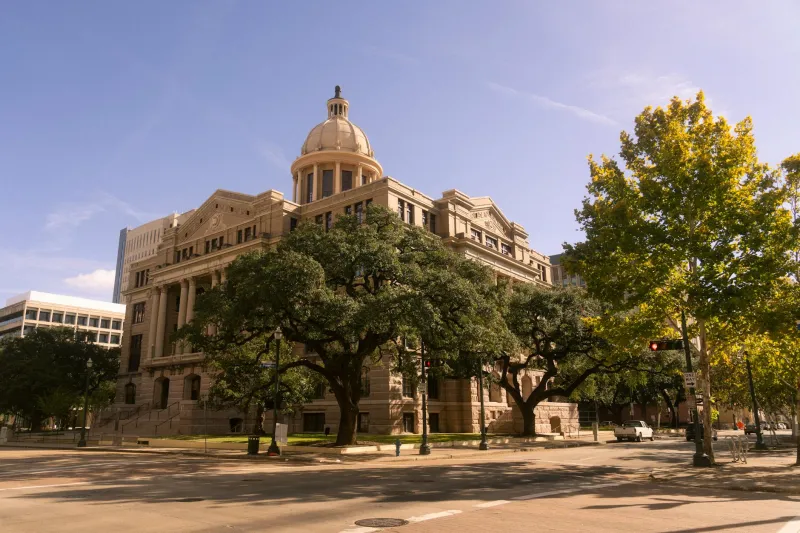
The Corporate Pipeline to Justice
When Judge Kathryn Kimball Mizelle struck down the federal mask mandate in April 2022, her ruling made national headlines for its sweeping rejection of public health authority. Less noticed was her professional biography: before joining the bench, Mizelle spent five years at Jones Day, a corporate law firm that represented airlines and hospitality companies fighting COVID-19 safety regulations.
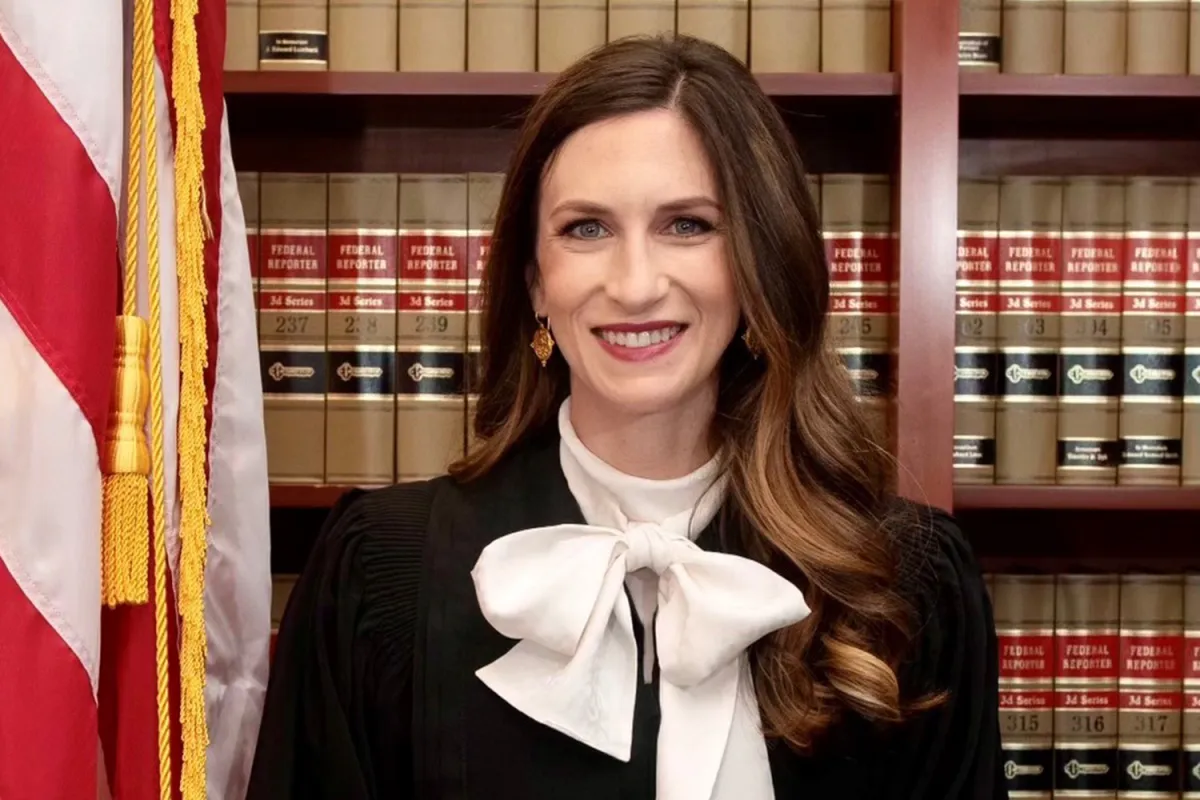 Photo: Judge Kathryn Kimball Mizelle, via www.the-sun.com
Mizelle's trajectory from corporate advocate to federal arbiter isn't unusual—it's become the standard path to judicial power. An analysis of federal judicial appointments since 2017 reveals that 73% of appellate court nominees came directly from private practice, with the vast majority representing corporations, financial institutions, and industry trade groups.
This isn't merely about conservative ideology; it's about structural conflicts of interest that compromise judicial independence. When former corporate lawyers become federal judges, they bring more than legal expertise—they carry professional relationships, financial incentives, and worldviews shaped by years of serving capital over public interest.
The Numbers Behind the Capture
The Alliance for Justice's comprehensive database of judicial appointments reveals the scope of corporate influence on federal courts. Since 2017, Republican presidents have appointed 234 federal judges. Of these, 171 came from private firms representing major corporations. Democratic appointments show similar patterns, though with slightly more diversity in prior experience.
The concentration is most pronounced at the appellate level, where judges make precedent-setting rulings that affect millions of Americans. Of the 54 circuit court judges appointed since 2017, 47 previously worked for firms representing Fortune 500 companies, financial institutions, or industry lobbying groups.
These aren't solo practitioners or public interest lawyers—they're partners at white-shoe firms billing $1,000+ per hour to help corporations avoid taxes, fight regulations, and limit liability for harmful products. Their clients read like a Who's Who of American corporate power: ExxonMobil, Goldman Sachs, Amazon, Pfizer, and Walmart.
The revolving door spins both ways. Federal judges who rule favorably for business interests often return to lucrative private practice after leaving the bench. Since 2010, 89 former federal judges have joined major corporate law firms, with starting salaries typically exceeding $2 million annually.
When Former Advocates Become Judges
The practical implications emerge in courtroom decisions that consistently favor corporate interests over worker rights, environmental protection, and consumer safety. A 2023 study by the Progressive Caucus Center found that judges with extensive corporate law backgrounds rule for business defendants 67% of the time in employment disputes, compared to 43% for judges with diverse professional experience.
Consider the Fifth Circuit Court of Appeals, which covers Texas, Louisiana, and Mississippi. Of its 17 active judges, 14 previously worked for firms representing oil companies, financial institutions, or business trade associations. This court has issued some of the most anti-regulatory decisions in recent memory, striking down environmental protections, worker safety rules, and consumer financial regulations.
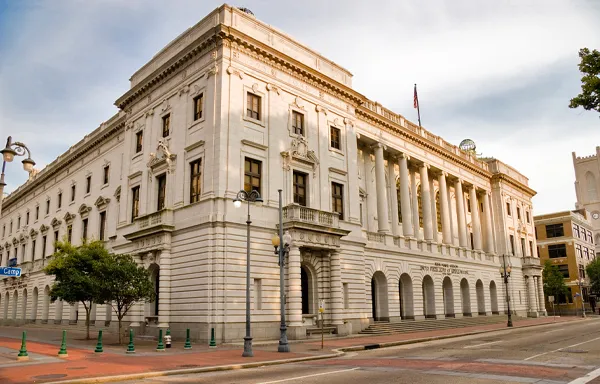 Photo: Fifth Circuit Court of Appeals, via brownfoxlaw.com
Judge James Ho exemplifies this pattern. Before joining the Fifth Circuit, Ho worked for Gibson Dunn, representing clients including Chevron, Bank of America, and the U.S. Chamber of Commerce. On the bench, he's authored opinions limiting corporate liability for environmental damage, restricting worker organizing rights, and expanding business speech protections.
 Photo: Judge James Ho, via i0.wp.com
The recusal system, designed to prevent conflicts of interest, has proven inadequate. Federal law requires judges to recuse themselves from cases involving former clients, but enforcement is largely voluntary. A 2022 investigation by the Wall Street Journal found that federal judges participated in 685 cases involving their former firms or clients, with recusals occurring in fewer than half these instances.
The Ideological and Financial Nexus
This judicial capture operates through both ideological alignment and financial incentive. Corporate law firms don't just hire lawyers—they shape legal thinking through sponsored academic conferences, think tank partnerships, and continuing education programs for judges.
The Federalist Society, which has effectively outsourced judicial selection for Republican presidents, receives millions from corporate donors including Google, Chevron, and the Koch network. Its judicial conferences, attended by sitting judges, feature panels on "regulatory overreach" and "economic liberty" that promote business-friendly legal theories.
Democratic judicial selections, while more diverse, often reflect similar corporate influence. Major law firms contribute heavily to Democratic candidates and maintain relationships with party leaders who influence judicial nominations. The result is a bipartisan consensus that corporate lawyers make ideal judges, even when their professional experience conflicts with judicial responsibilities.
The financial incentives extend beyond individual career paths. Law firms market their "judicial experience" to corporate clients, charging premium rates for lawyers who've served on the bench. This creates powerful incentives for judges to maintain relationships with former colleagues and potential future employers.
Democracy's Disappearing Referee
The federal judiciary was designed to serve as democracy's referee, checking legislative and executive power while protecting constitutional rights. When judges come overwhelmingly from corporate law firms, this independence erodes. Courts become another venue for advancing business interests rather than neutral arbiters of law.
This capture has accelerated under both parties but reached new heights during the Trump administration. The Heritage Foundation and Federalist Society created assembly-line processes for identifying and vetting corporate lawyers for judicial appointments. Their success rate was remarkable: 85% of Trump's judicial nominees had extensive corporate law experience.
The Biden administration promised greater diversity but has largely continued appointing corporate lawyers to federal courts. While Biden's nominees include more women and people of color, their professional backgrounds remain dominated by corporate law firm experience. This suggests that diversifying the judiciary's demographics while maintaining its class composition may not fundamentally alter judicial outcomes.
International Comparisons and Alternative Models
Other democracies structure judicial selection to minimize corporate capture. In Germany, judges advance through career civil service tracks rather than private practice. France's highest courts draw from specialized judicial schools rather than corporate law firms. Even the United Kingdom, despite its commercial law tradition, maintains clearer separation between private practice and judicial service.
These systems aren't perfect, but they demonstrate alternatives to America's corporate-dominated model. Countries with more diverse judicial backgrounds tend to have stronger worker protections, environmental regulations, and consumer rights—suggesting that judicial composition shapes legal outcomes in measurable ways.
The Path Forward
Reforming judicial selection requires confronting both structural and political obstacles. Senate confirmation processes could demand detailed disclosure of former clients and financial relationships. Recusal rules need mandatory enforcement with independent oversight. Judicial ethics codes should restrict post-service employment with former clients.
More fundamentally, judicial selection should prioritize diverse professional experience over corporate law credentials. Public defenders, civil rights attorneys, labor lawyers, and government prosecutors bring perspectives that corporate lawyers lack. Their appointment would restore balance to courts increasingly dominated by business interests.
The stakes extend beyond individual cases to democracy's foundational promise of equal justice under law. When judges consistently favor the interests they once served professionally, this promise becomes hollow. Restoring judicial independence requires breaking the corporate pipeline to the bench before it completely captures American justice.