When Maria Gonzalez's car broke down last month, she didn't just lose her transportation—she lost her livelihood. As a DoorDash driver in Oakland, California, Gonzalez had no sick leave to fall back on, no workers' compensation to cover her medical bills from the accident, and no unemployment insurance to bridge the gap while she searched for another job. Despite working 50 hours a week delivering food, she was classified as an "independent contractor," which meant she was entitled to none of the basic protections that actual employees receive.
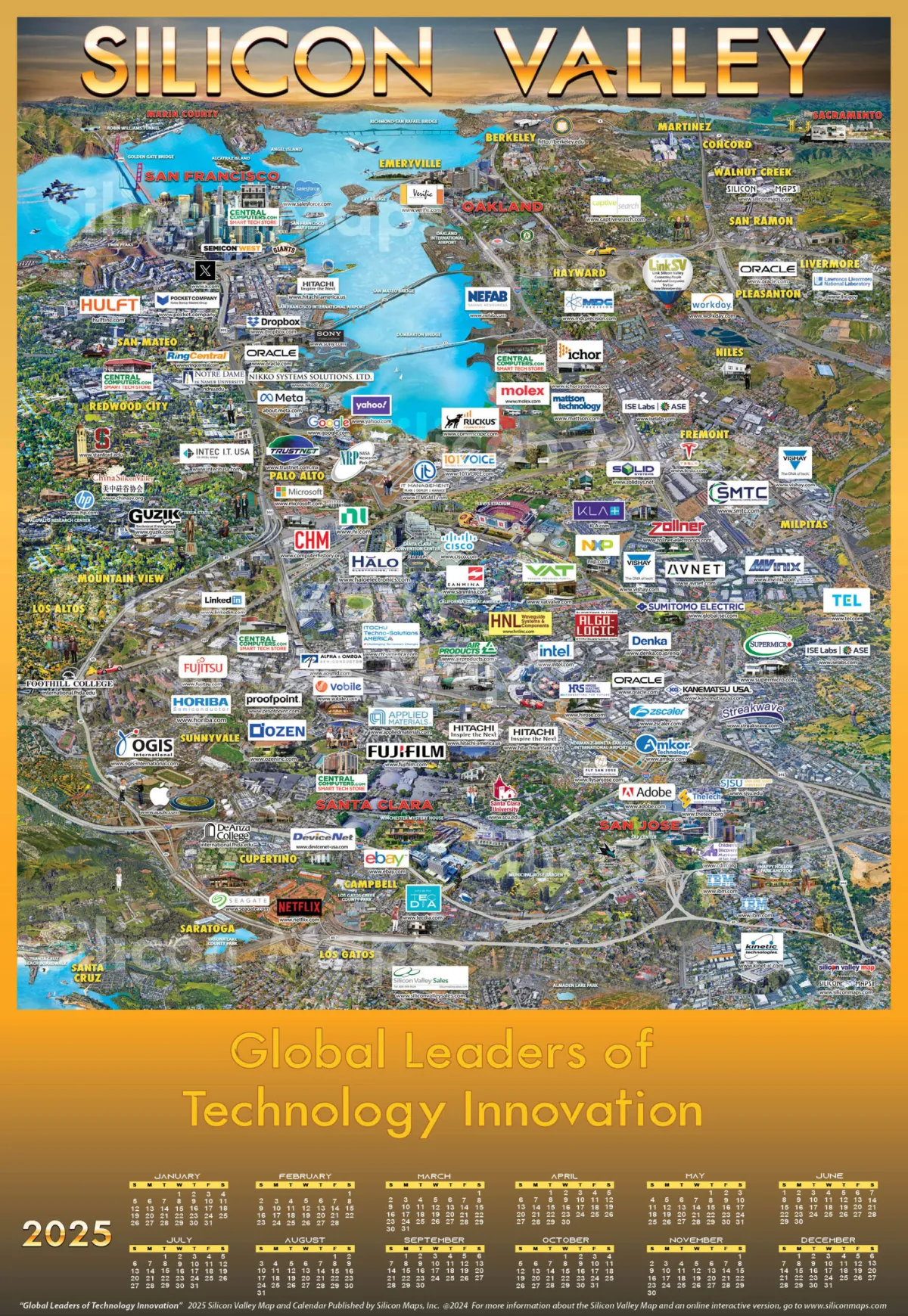 Photo: Silicon Valley, via siliconmaps.com
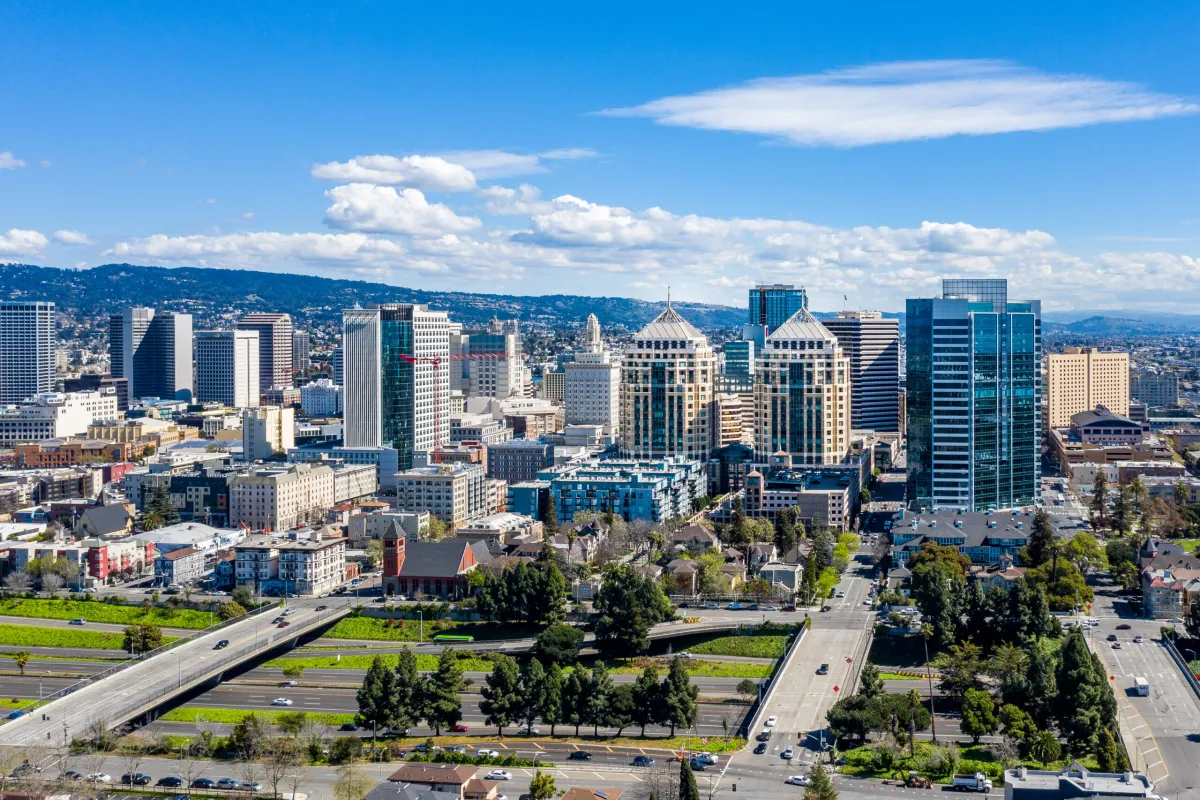 Photo: Oakland, California, via www.cooldestinations.com
Gonzalez's story isn't an anomaly—it's the business model. Across America, an estimated 60 million workers are now trapped in the gig economy, a deliberately constructed system that allows corporations to extract labor while shirking the fundamental responsibilities of employment. This isn't technological disruption; it's labor law destruction, executed with surgical precision by some of the world's most powerful companies.
The Misclassification Machine
The cornerstone of the gig economy's exploitation is worker misclassification—the practice of labeling employees as independent contractors to avoid paying minimum wage, overtime, benefits, or payroll taxes. Companies like Uber, Lyft, DoorDash, and Amazon Flex have built their entire business models around this legal fiction, saving an estimated 30% on labor costs by shifting risk and expenses onto workers.
The numbers tell the story of systematic wage theft. A 2020 study by the Economic Policy Institute found that misclassified workers lose an average of $6,000 per year in wages and benefits. For rideshare drivers, the median hourly wage after accounting for vehicle expenses drops to just $9.21—well below the federal minimum wage. Meanwhile, Uber's former CEO Dara Khosrowshahi earned $42.4 million in 2021, a compensation package that could fund healthcare benefits for roughly 1,200 drivers.
The human cost of this arrangement falls disproportionately on communities that have historically faced employment discrimination. According to Bureau of Labor Statistics data, 30% of gig workers are Latino, 20% are Black, and 40% are immigrants—demographics that often have fewer alternative employment options and less political power to fight back.
The Billion-Dollar Influence Campaign
Silicon Valley didn't stumble into this arrangement—they engineered it through one of the most expensive corporate lobbying campaigns in American history. The centerpiece was California's Proposition 22, a 2020 ballot measure that exempted app-based companies from the state's AB5 law requiring worker reclassification. Uber, Lyft, DoorDash, Instacart, and Postmates spent a record-breaking $224 million to pass the measure, outspending opponents by a ratio of 10-to-1.
The campaign was a masterclass in corporate manipulation. Companies sent push notifications to users threatening service disruptions, plastered misleading ads claiming drivers preferred contractor status, and even allegedly threatened to leave California entirely. The messaging focused on "driver flexibility" while carefully omitting that drivers could maintain flexible schedules as employees—a model that works successfully in other industries.
Beyond California, these companies have deployed armies of lobbyists to prevent similar worker protection laws in other states. They've pushed federal legislation to override state-level protections and funded think tanks that produce studies downplaying the harms of misclassification. This isn't just regulatory capture—it's regulatory sabotage on a national scale.
The Real Cost of "Disruption"
Proponents argue that gig work provides valuable flexibility and economic opportunity, particularly for workers who can't commit to traditional schedules. There's some truth to this—many drivers do value the ability to work when they choose. But this argument deliberately conflates flexibility with exploitation, suggesting that workers must choose between schedule control and basic labor protections.
The reality is that employee status doesn't preclude flexible scheduling. Teachers, nurses, and countless other professionals manage variable hours while retaining benefits and wage protections. The difference is that those industries haven't successfully convinced lawmakers that exploitation is innovation.
Moreover, the "flexibility" argument ignores the algorithmic control these platforms exert over workers. Uber and Lyft use dynamic pricing and strategic incentives to direct driver behavior, while rating systems create de facto performance management. Workers who refuse rides or deliveries face "deactivation"—essentially firing without due process. This isn't independent contracting; it's employment with extra steps and fewer protections.
Fighting Back: The AB5 Model
California's AB5 law, though weakened by Proposition 22, offers a roadmap for progressive reform. The legislation established a clear three-part test for worker classification: companies must prove that workers are free from company control, perform work outside the company's usual business, and operate independent enterprises. This "ABC test" closes the loopholes that allow obvious employment relationships to be disguised as contracting arrangements.
Since AB5's passage, several other states have adopted similar frameworks. New York has begun enforcing minimum wage requirements for app-based drivers, while Seattle passed legislation allowing gig workers to organize collectively. These victories demonstrate that corporate inevitability is a myth—when workers and advocates organize effectively, they can force accountability even from tech giants.
The path forward requires federal action. The PRO Act, which passed the House in 2021, would establish national standards for worker classification and strengthen organizing rights. While Senate Republicans blocked the legislation, it remains the most comprehensive framework for addressing gig economy exploitation at scale.
The Stakes of Surrender
The gig economy represents more than just a labor dispute—it's a test of whether American democracy can constrain corporate power when it conflicts with worker welfare. If companies can successfully rewrite fundamental employment law through ballot measure campaigns and lobbying blitzes, what prevents them from dismantling other worker protections?
The broader implications extend beyond app-based platforms. Traditional employers are increasingly adopting "gig-ification" strategies, converting full-time positions to contract roles to reduce costs and avoid responsibilities. If this trend continues unchecked, the stable middle-class jobs that built American prosperity could become historical artifacts.
Toward Economic Justice
The solution isn't to destroy the gig economy—it's to democratize it. Workers should retain scheduling flexibility while gaining the protections that make that flexibility meaningful. This means portable benefits that travel between jobs, collective bargaining rights that give workers real power, and enforcement mechanisms that make wage theft costly rather than profitable.
Maria Gonzalez eventually found another car and returned to delivering food, but her financial security remains precarious. She represents millions of workers whose labor powers a digital economy that has generated unprecedented wealth for its architects while leaving its workforce vulnerable to every economic shock. The question isn't whether we can afford to protect these workers—it's whether we can afford not to.
In a democracy, the price of innovation shouldn't be paid exclusively by those with the least power to resist.