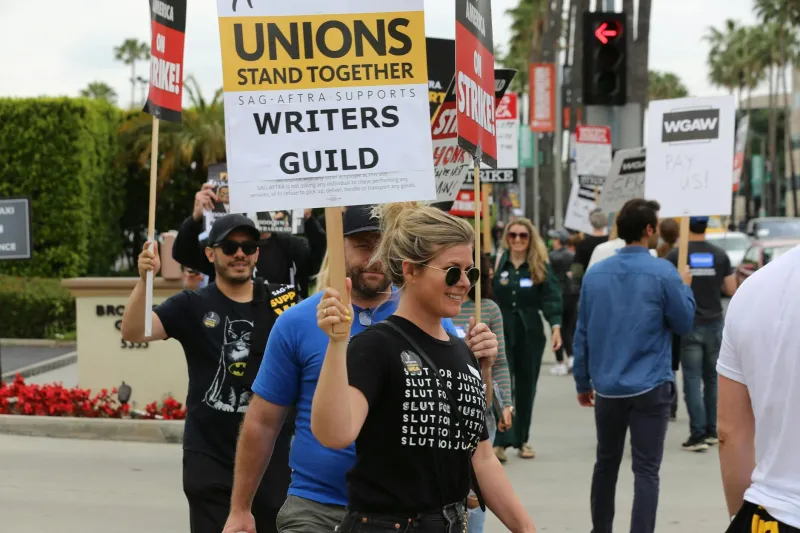
Across America's corporate landscape, something remarkable is happening. Workers at Amazon warehouses in Alabama and New York are voting on union representation. Baristas at over 400 Starbucks locations have filed for union elections. Hollywood writers and actors shut down the entertainment industry for months, winning historic protections against AI displacement. Apple store employees in Maryland became the first to unionize at the tech giant. This isn't isolated workplace friction—it's the most significant labor organizing wave the United States has seen since the 1970s.
A Generational Shift in Economic Thinking
The numbers tell the story of a profound generational awakening. According to Gallup polling, 68% of Americans now approve of labor unions—the highest level since 1965. But dig deeper, and the real revolution becomes clear: among workers under 35, union approval soars to 77%. These are the employees watching their rent consume half their paychecks while their employers post record quarterly profits. They're the college graduates discovering that their degrees bought them gig work without benefits, not the middle-class stability their parents promised.
This generation didn't inherit labor organizing from their parents—most grew up during the decades when union membership collapsed from 35% of the workforce in the 1950s to just 10.3% today. Instead, they're rediscovering collective action as a practical response to economic reality. When individual negotiation fails against corporations worth hundreds of billions, workers are remembering that solidarity isn't ideology—it's mathematics.
The Corporate Response Reveals the Stakes
The ferocity of corporate resistance to this organizing wave exposes exactly why it matters. Amazon has spent millions on anti-union consultants and mandatory worker meetings. Starbucks has been accused of closing unionizing stores and firing pro-union employees. Apple reportedly hired the same union-busting firm that helped defeat Amazon's warehouse campaign. These aren't the actions of companies facing minor workplace adjustments—they're the desperate moves of entities that understand their profit margins depend on keeping workers isolated and powerless.
Consider the math that terrifies corporate boardrooms: Starbucks CEO Laxman Narasimhan earned $14.6 million in 2023, while the company's median worker made $14,209—a ratio of over 1,000 to 1. Amazon's Andy Jassy made $1.3 million in salary plus $212 million in stock awards, while warehouse workers start at $15-17 per hour with productivity quotas that leave little time for bathroom breaks. When workers organize, they don't just demand higher wages—they challenge the entire structure that allows such extreme inequality.
Beyond Wages: Democracy in the Workplace
Critics dismiss the union surge as economic populism that will price American workers out of global competition. This argument assumes that the current system—where corporate executives unilaterally set wages, hours, and working conditions—represents some natural economic order. It doesn't. It represents a political choice, made through decades of policy decisions that weakened collective bargaining, allowed right-to-work laws to spread, and prioritized shareholder returns over worker welfare.
The truth is that countries with stronger labor movements, like Germany and Denmark, maintain highly competitive economies while providing workers far greater security and voice. Germany's manufacturing sector thrives with powerful unions and worker representation on corporate boards. Denmark has no minimum wage law because collective bargaining ensures living wages across industries. These aren't economic handicaps—they're alternative models that prove worker power and economic success can coexist.
The Human Cost of Powerlessness
Behind every organizing drive are workers whose lives have been shaped by their powerlessness. The Amazon warehouse employee whose productivity metrics leave no time for adequate breaks. The Starbucks barista juggling multiple jobs because even "management" roles don't pay enough for rent. The Hollywood writer watching studios use AI to devalue their craft. The Apple store worker with a college degree making barely above minimum wage while selling devices that cost more than their monthly salary.
These workers aren't asking for handouts—they're demanding a voice in decisions that govern their daily lives. When your employer can change your schedule with two hours' notice, cut your benefits to boost quarterly earnings, or replace you with an algorithm, you're not participating in a free labor market. You're subject to corporate autocracy. Unions don't threaten economic freedom—they create it by giving workers the power to negotiate as equals.
The Political Earthquake Ahead
This organizing wave carries implications far beyond individual workplaces. A generation of workers discovering their collective power will reshape American politics. They'll demand candidates who support card check recognition, oppose right-to-work laws, and strengthen the National Labor Relations Board. They'll vote for policies that prioritize full employment over inflation fears and public investment over tax cuts for the wealthy.
Republican politicians who built careers on "right-to-work" rhetoric will face voters who've experienced the difference between individual bargaining and collective action. Democratic politicians will confront a base that expects more than symbolic support for unions—they'll demand concrete policy changes that shift power from capital to labor. The workers organizing today are tomorrow's voters, and they're learning lessons about power that no amount of corporate messaging can undo.
The union renaissance isn't about returning to some imagined golden age of American labor—it's about building the economic democracy that this generation needs to survive and thrive in the 21st century.