
The Promise vs. The Reality
When President Trump signed the VA MISSION Act in 2018, it was sold as the solution to the VA's chronic problems. Veterans would finally get the care they deserved, the argument went, by expanding access to private healthcare providers through the Community Care Network. Five years later, the results are in: veterans are dying while defense contractors get rich.
The latest data from the VA Inspector General reveals that veterans using community care face 23% longer wait times for specialty appointments compared to those treated within the VA system. Meanwhile, private healthcare spending under the MISSION Act has ballooned to $24 billion annually—money that could have funded 47 new VA medical centers or hired 120,000 additional VA healthcare workers.
Following the Money Trail
This isn't healthcare reform—it's wealth transfer disguised as veteran advocacy. The lobbying records tell the real story. Between 2016 and 2023, major healthcare corporations and private equity firms spent $127 million lobbying for VA privatization policies. CVS Health alone dropped $8.2 million, while Humana contributed $14.6 million to the cause.
These same companies now hold lucrative contracts worth billions. CVS Health's Aetna subsidiary manages veteran healthcare in multiple regions, collecting administrative fees whether veterans receive good care or not. Humana operates similar networks across 18 states, while private equity-backed urgent care chains like GoHealth have proliferated in veteran-dense communities, offering quick fixes instead of comprehensive care.
The revolving door spins predictably. Former VA officials now work for these same corporations, while industry executives cycle through senior VA positions. David Shulkin, Trump's VA Secretary who championed privatization before his ouster, now sits on multiple healthcare company boards. This isn't coincidence—it's institutional capture.
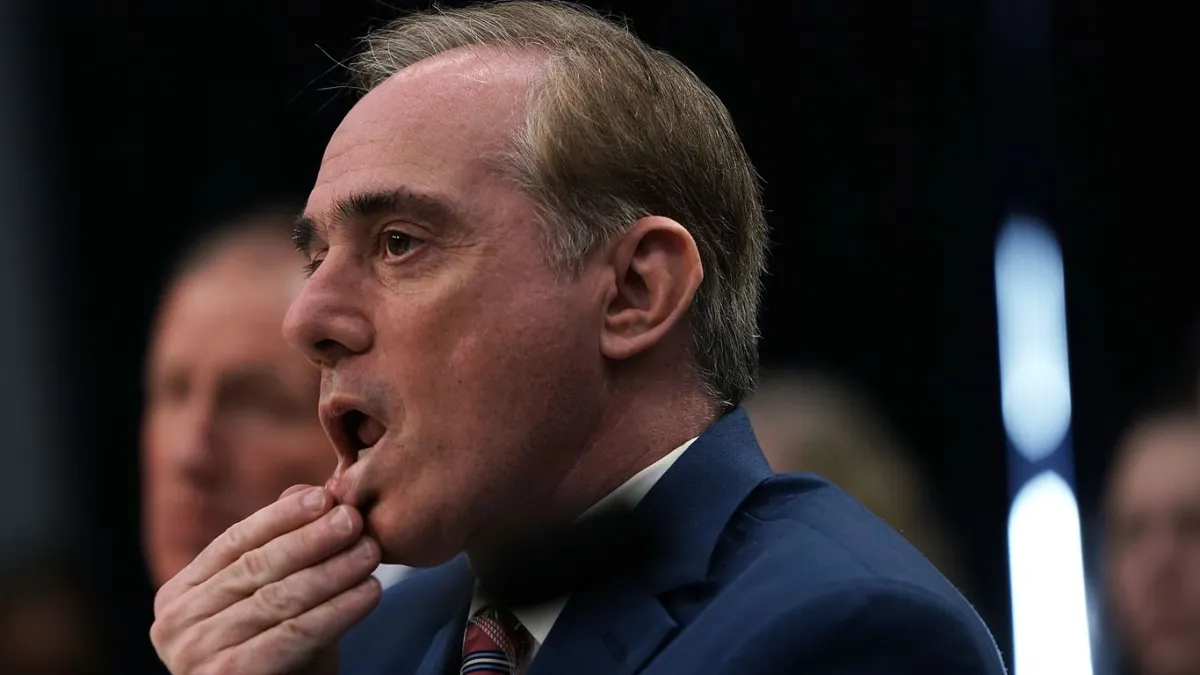 Photo: David Shulkin, via images.axios.com
The Human Cost of Corporate Care
Proponents argue that choice equals better outcomes, but the evidence contradicts this market fundamentalism. VA hospitals consistently outperform private facilities on key quality metrics. Veterans treated within the VA system have lower mortality rates for major surgeries, better management of chronic conditions like diabetes and heart disease, and superior mental health outcomes.
The reason is systemic: VA providers specialize in veteran-specific conditions. They understand military sexual trauma, blast injuries, and the complex interplay between PTSD and substance abuse. Private providers, incentivized by volume and profit margins, often lack this expertise. A veteran with Gulf War Syndrome gets shuffled between specialists in the private system, accumulating bills while their condition deteriorates.
Worse, the privatization push has gutted VA capacity just as demand surges. Since 2018, the VA has closed 1,100 hospital beds and eliminated 4,200 healthcare positions, even as Afghanistan and Iraq veterans enter their peak healthcare years. This artificial scarcity forces more veterans into private networks, creating a self-fulfilling prophecy of VA "failure."
The Ideological Project Behind the Healthcare Veneer
The VA privatization campaign follows a familiar neoliberal playbook: defund public services, point to resulting problems, then sell privatization as the solution. Conservative think tanks like the Heritage Foundation and American Enterprise Institute have pushed this agenda for decades, viewing the VA's success as an inconvenient argument for single-payer healthcare.
 Photo: Heritage Foundation, via www.flagheritagefoundation.org
Their strategy is working. Public trust in the VA has eroded even as its clinical outcomes improve. Media coverage amplifies every VA scandal while ignoring private sector failures. When a veteran dies waiting for private care, it's treated as an individual tragedy rather than systemic failure.
Critics claim the VA is inherently inefficient, but international comparisons demolish this argument. The UK's NHS, Canada's provincial systems, and France's mixed model all deliver better outcomes at lower costs than America's privatized approach. The VA, when properly funded, performs similarly well.
Democracy and Accountability on the Line
This fight transcends healthcare—it's about whether public institutions can serve public purposes. The VA represents one of America's most successful examples of socialized medicine, providing evidence that government-run healthcare works when adequately resourced.
Privatizing veteran care also undermines democratic accountability. When veterans receive poor treatment from private contractors, they have little recourse. Corporate executives answer to shareholders, not Congress or veterans' organizations. The VA, despite its flaws, remains subject to congressional oversight, inspector general investigations, and veteran advocacy pressure.
The electoral implications are significant. Veterans comprise 13% of the adult population and vote at higher rates than civilians. Their healthcare experiences shape broader attitudes toward government's role in society. Successfully privatizing the VA would eliminate a powerful argument for Medicare for All while enriching the same insurance companies that deny care to millions of Americans.
A Choice Between Values
Veterans didn't sign up to become profit centers for healthcare corporations—they served their country with the promise that their country would serve them in return. The VA, for all its bureaucratic frustrations, embodies that covenant between citizen and state.
Privatization breaks that promise, substituting market relationships for moral obligations. It tells veterans that their service earns them the right to shop for healthcare, not receive it as an entitlement of citizenship.
America faces a choice: honor our veterans with the comprehensive, specialized care they've earned, or abandon them to a private system that values their wallets over their wounds.