Broke, Buried, and Locked Out: How Medical Debt Silences the Working Poor at the Ballot Box
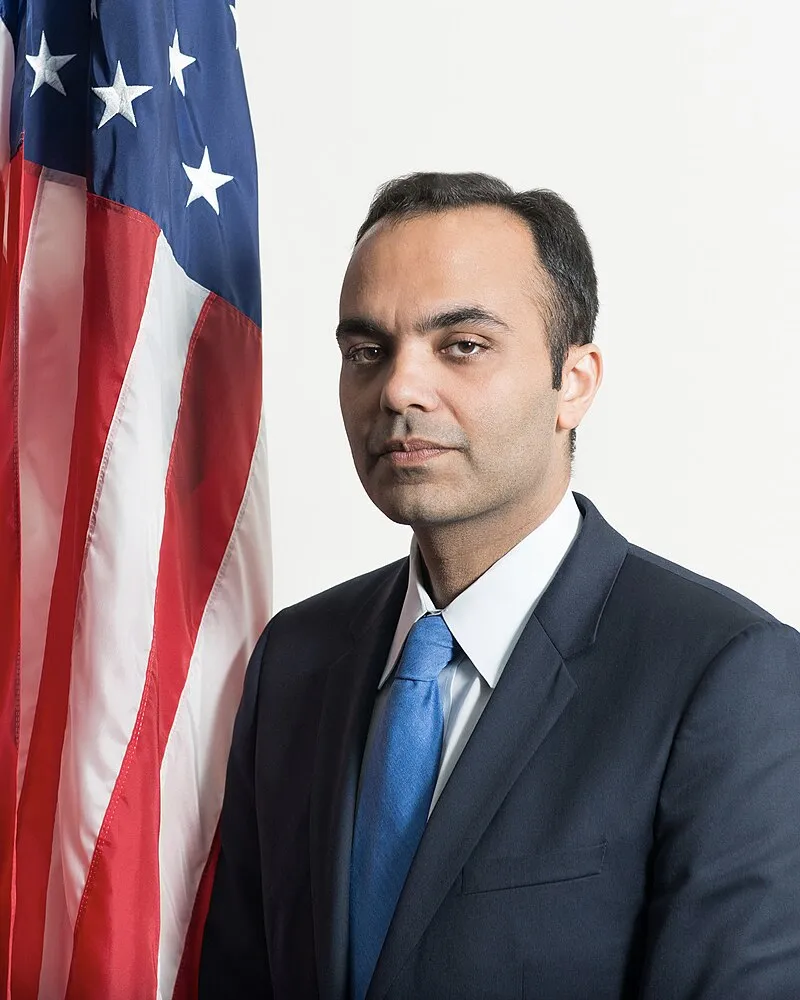
Photo of Rohit Chopra, via Wikimedia Commons
The Ballot They Never Cast
In the spring of 2024, researchers at the University of Michigan published findings that should have triggered a national conversation. Their analysis of survey data found that Americans carrying significant medical debt were substantially less likely to report being registered to vote, less likely to have voted in the previous election cycle, and significantly less likely to engage in any form of political organizing — attending a meeting, contacting an elected official, donating to a campaign. The correlation held after controlling for income, education, and race. Medical debt, independent of poverty itself, was associated with measurable civic withdrawal.
This is not a coincidence of demography. It is a mechanism. And understanding how it works — how the American medical debt system functions as a suppression apparatus for working-class political power — requires looking at the full chain of consequences that a single medical bill can set in motion.
From the ER to the Credit Bureau
Approximately 100 million Americans carry medical debt in some form, according to a 2022 investigation by KFF Health News and NPR — one of the most comprehensive analyses of medical debt in the country. The total burden is estimated at over $220 billion. Unlike other forms of consumer debt, medical debt is frequently incurred involuntarily, without prior knowledge of the cost, and by people who were already in crisis when they signed whatever paperwork a hospital placed in front of them.
When that debt goes unpaid — as it frequently does, because the median medical debt balance reported in that same investigation was $2,500, an amount that is catastrophic for a household earning $35,000 a year — it enters a collection ecosystem that has its own logic and its own consequences. Until recently, medical debt appeared on credit reports and was weighted heavily in credit scoring models. The Consumer Financial Protection Bureau moved in 2024 to remove medical debt from credit reports entirely, a significant reform. But the rule faces legal and political challenges, and in the interim, millions of Americans have already had their credit scores destroyed by hospital bills.
A damaged credit score is not merely an inconvenience. It is a cascading disadvantage that touches housing access, employment screening, auto loan rates, insurance premiums, and in some states, professional licensing. It is the financial equivalent of a permanent record — and it lands with disproportionate force on Black and Latino households, who carry higher rates of medical debt due to structural disparities in insurance coverage and income.
The Swing State Dimension
The geography of medical debt is not politically neutral. The states with the highest rates of uninsured residents, the weakest Medicaid expansion coverage, and the highest concentrations of hospital debt collection litigation are, with striking regularity, the states that determine presidential elections. Georgia, Wisconsin, Arizona, Pennsylvania, North Carolina — the map of contested American democracy overlaps substantially with the map of concentrated medical debt burden.
In Georgia, a state that decided two U.S. Senate seats and a presidential race within the span of a single election cycle, nonprofit investigative outlet ProPublica documented in 2022 how Northside Hospital — one of the state's dominant health systems — had filed tens of thousands of lawsuits against patients, garnishing wages and placing liens on homes. The patients targeted were overwhelmingly low-income, disproportionately Black, and concentrated in communities that progressive organizing efforts had been working to mobilize. Debt collection litigation, wage garnishment, and the attendant financial trauma do not announce themselves as voter suppression. But the effect is functionally indistinguishable.
Precarity as Political Control
The political science literature on what scholars call "civic engagement" and "participatory inequality" has long established that financial stress suppresses political participation. The mechanisms are both psychological and practical. Practically: a person whose wages are being garnished, who is fielding calls from collection agencies, and who is managing the cascading consequences of a destroyed credit score does not have the bandwidth to research candidates, attend precinct meetings, or navigate a voter registration process that in many states involves additional bureaucratic friction. Psychologically: financial shame — and the American culture around debt is saturated with it — produces social withdrawal. People in financial distress report feeling like failures, like they have forfeited standing in public life. That feeling is not accidental. It is cultivated by an industry that profits from the legal enforcement of debt and from the political passivity of the people it pursues.
The strongest counterargument here is one of intentionality: debt collectors are not running voter suppression operations. They are collecting legally owed debts. The civic consequences are incidental, not designed. This is a fair distinction, and it matters for how we assign moral responsibility. But it does not change the policy analysis. A system that predictably, measurably, and disproportionately suppresses the political participation of working-poor people of color in swing states is a problem that demands a structural response regardless of whether anyone intended it.
What Reform Would Require
The CFPB's move to remove medical debt from credit reports was a meaningful step, and its defense against legal challenge should be a progressive legislative priority. But it is insufficient on its own. Several states — including Colorado, New York, and Maryland — have enacted laws limiting or prohibiting medical debt collection lawsuits, wage garnishment for medical bills, and hospital liens on primary residences. These state-level models deserve federal analogues.
More fundamentally, the connection between medical debt and civic disengagement is an argument — a powerful one — for universal healthcare coverage. Not as an abstraction of fairness, but as a concrete democracy intervention. A country in which a single hospitalization cannot destroy a family's financial standing, credit profile, and civic capacity is a country with a larger, more representative electorate. The opposition to universal coverage is, among other things, an opposition to that electorate.
The people this system silences are not disengaged from politics because they don't care. They are disengaged because a system of financial punishment has made engagement feel like a luxury they cannot afford — and until we name that for what it is, we will keep wondering why the people with the most at stake show up the least.