The Criminalization of Poverty: How Cash Bail, Court Fees, and Fines Turned America's Legal System Into a Collection Agency for the Poor

The Criminalization of Poverty: How Cash Bail, Court Fees, and Fines Turned America's Legal System Into a Collection Agency for the Poor
Kalief Browder was 16 years old when he was arrested for allegedly stealing a backpack in the Bronx. Unable to afford the $3,000 bail, he spent three years at Rikers Island awaiting trial—much of it in solitary confinement—before charges were eventually dropped. Two years after his release, Browder died by suicide, his life destroyed by a system that punished him not for any crime, but for the crime of being poor.
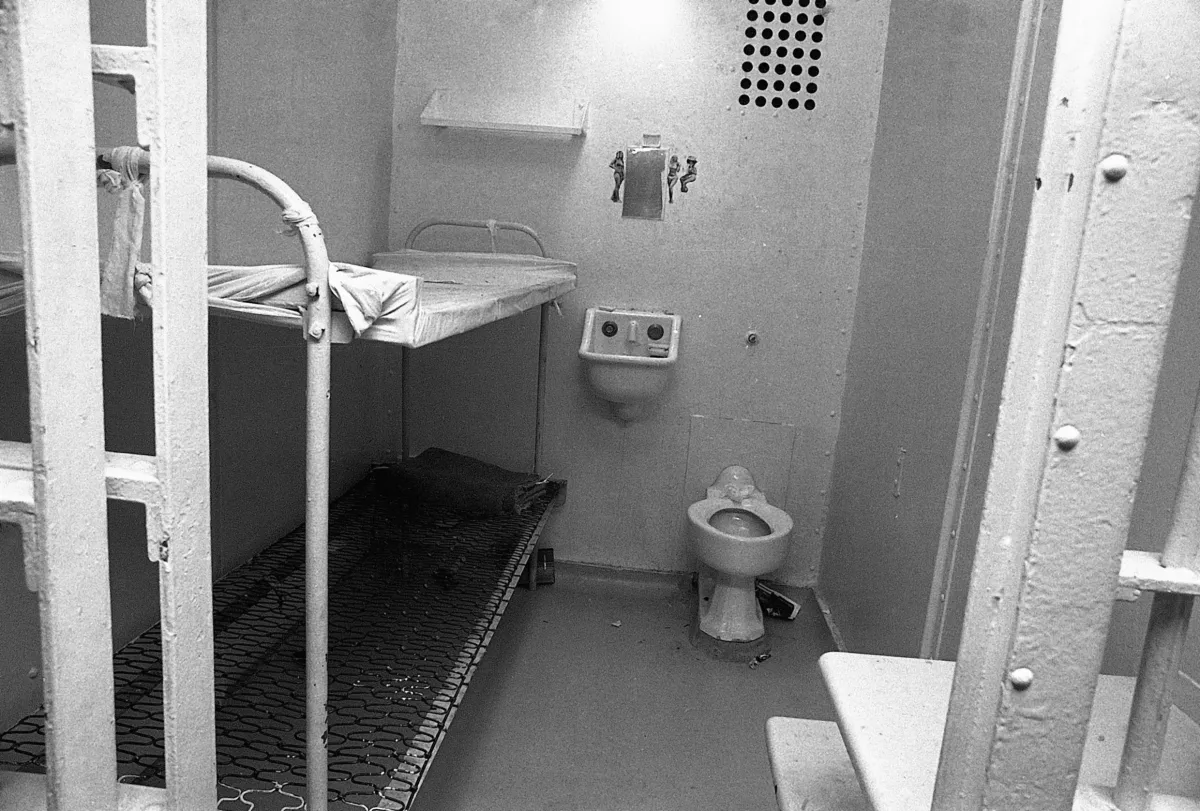 Photo: Rikers Island, via www.the-sun.com
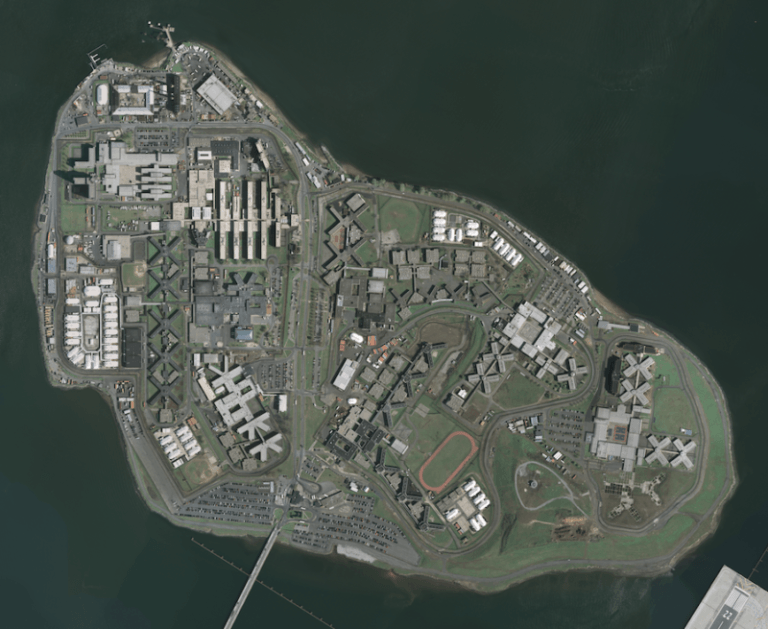 Photo: Kalief Browder, via allthatsinteresting.com
Browder's story shocked the nation, but his experience wasn't exceptional. Every day, hundreds of thousands of Americans sit in jail cells not because they've been convicted of a crime, but because they can't afford to buy their freedom. Meanwhile, wealthy defendants charged with far more serious offenses walk free simply because they can write a check. This isn't an unfortunate side effect of American justice—it's how the system is designed to work.
The Bail Bond Racket
Cash bail exists, in theory, to ensure defendants return to court. In practice, it functions as a wealth test that sorts Americans into two categories: those who can afford their constitutional presumption of innocence, and those who cannot. On any given day, roughly 450,000 people sit in American jails awaiting trial—nearly two-thirds of the total jail population—because they cannot afford bail amounts that average just $10,000.
The human cost is staggering. Pretrial detention destroys lives even when charges are eventually dropped or defendants are acquitted. People lose jobs, homes, and custody of their children. They're more likely to plead guilty to crimes they didn't commit simply to get out of jail. A 2013 study by the Laura and John Arnold Foundation found that defendants detained pretrial are four times more likely to be sentenced to prison and receive sentences 2.5 times longer than those released on bail.
The economic incentives are equally perverse. The commercial bail bond industry—worth roughly $2 billion annually—has a vested interest in maintaining high bail amounts and fighting reform. Bail bond companies typically charge non-refundable fees of 10-15% of the bail amount, money that families never get back regardless of the case outcome. For a $10,000 bail, that's $1,000-$1,500 that could have paid rent, bought groceries, or covered medical bills.
The Ferguson Model Goes National
The Department of Justice's investigation into Ferguson, Missouri following Michael Brown's killing exposed a municipal government that had essentially converted its police and court systems into revenue generators. The city issued an average of three arrest warrants per household, generated $2.6 million annually from fines and fees (representing 23% of the city's budget), and maintained a court system that existed primarily to extract money from Black residents.
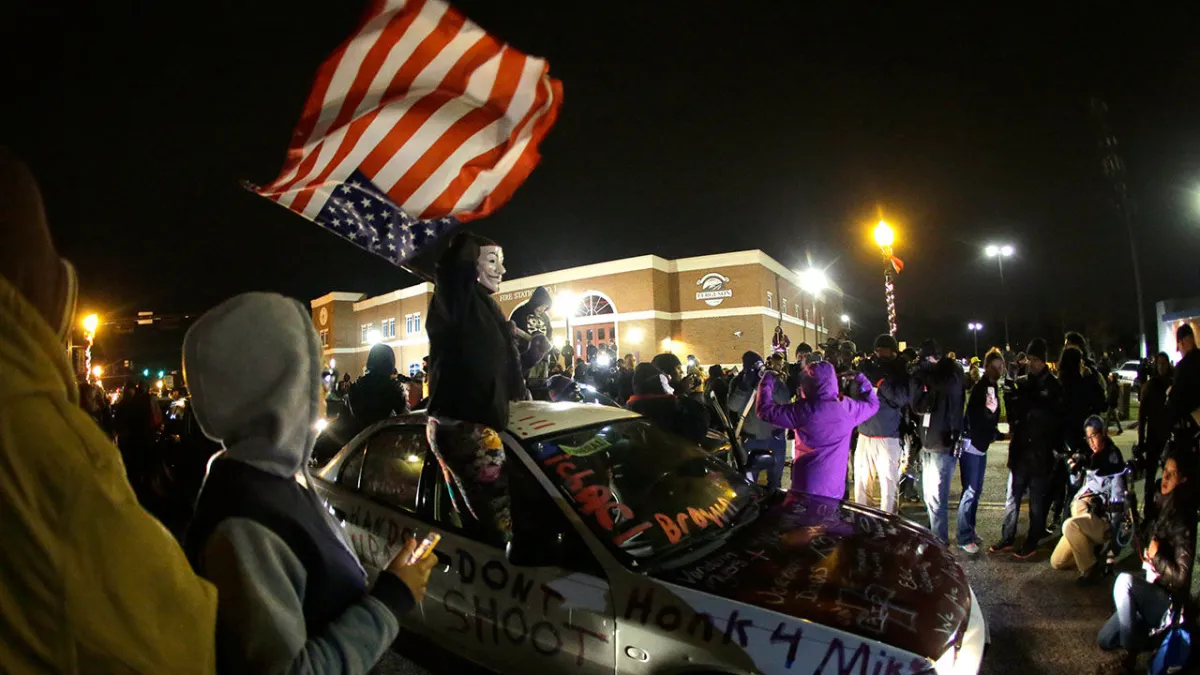 Photo: Ferguson, Missouri, via cdn.abcotvs.com
But Ferguson wasn't an outlier—it was a particularly egregious example of a national phenomenon. Across the country, cash-strapped municipalities have discovered that policing the poor generates more reliable revenue than taxing the wealthy. A 2019 study by the Brennan Center for Justice found that fines and fees comprise more than 10% of general fund revenues in 27% of the jurisdictions studied, with some cities deriving more than 40% of their budgets from court-imposed penalties.
The mechanics are simple and brutal. Cities issue fines for minor infractions—broken taillights, jaywalking, loud music, "failure to comply" with police orders. When defendants can't afford to pay immediately, courts add late fees, processing fees, collection fees, and interest. Miss a payment? There's a warrant for your arrest and additional fees. Get arrested on that warrant? More fees for booking, housing, and court processing.
The Poverty Penalty Spiral
Consider the journey of a typical defendant through this system. Maria Santos receives a $200 ticket for driving with a suspended license—suspended because she couldn't afford to pay previous traffic tickets. Unable to afford the fine, she misses her court date while working a double shift to pay rent. The court adds a $50 failure-to-appear fee and issues a warrant.
When Santos is eventually arrested on the warrant, she's charged $75 for booking, $35 per day for jail housing, and a $100 warrant fee. Her bail is set at $1,500—money she doesn't have. After five days in jail (losing her job in the process), she's released on a payment plan that includes the original fine plus all accumulated fees and costs: now $580 total.
The payment plan includes a monthly "supervision fee" of $40. When Santos misses a payment because she's still looking for work after losing her job during her jail stay, the court adds another $25 late fee. The cycle continues indefinitely, with each missed payment generating new fees and new opportunities for arrest.
This isn't theoretical. The Brennan Center documented cases where $100 fines ballooned into thousands of dollars in total debt, where people spent months in jail for infractions that carry no jail time, where families lost homes and cars to pay court debts that grew faster than they could be repaid.
The Constitutional Charade
Defenders of the current system often invoke public safety and fiscal responsibility. They argue that bail ensures defendants appear in court and that fines deter criminal behavior. But the evidence contradicts both claims. Studies consistently show that pretrial detention increases rather than decreases crime rates, as people lose jobs, housing, and social support systems. Meanwhile, jurisdictions that have eliminated cash bail—like Washington D.C. and several New Jersey counties—have seen no increase in failure-to-appear rates or public safety problems.
The fiscal responsibility argument is even more cynical. Cities that rely heavily on fines and fees are essentially imposing a regressive tax on their poorest residents while allowing wealthier residents and businesses to avoid paying for essential services. It's taxation without representation for those least able to afford it and least able to fight back politically.
Most fundamentally, wealth-based detention violates the constitutional principle of equal justice under law. The Fourteenth Amendment's Equal Protection Clause prohibits the government from treating people differently based solely on their economic status. When two people charged with identical crimes face different consequences based only on their ability to pay, the constitutional promise of equality becomes meaningless.
The Reform Movement Fights Back
Across the country, grassroots organizations, progressive prosecutors, and civil rights lawyers are challenging the criminalization of poverty. The Movement for Black Lives has made ending cash bail a central demand. Organizations like the Bail Project provide free bail assistance while advocating for systemic reform. Public defenders' offices are filing constitutional challenges to wealth-based detention.
Some progress has been made. California passed legislation largely eliminating cash bail, though implementation has been delayed by industry-funded opposition. New York reformed its bail laws, though subsequent political pressure led to partial rollbacks. Several cities have stopped jailing people for inability to pay fines and fees.
But meaningful reform requires confronting the economic interests that profit from the current system. The bail bond industry spends millions on lobbying and campaign contributions to maintain the status quo. Private companies that collect court debt take a percentage of everything they recover. Even some public officials resist reform because fines and fees represent easy revenue that doesn't require raising taxes on wealthy constituents.
Justice or Revenue Collection?
The choice facing America is stark: we can have a justice system that treats all defendants equally regardless of wealth, or we can have a system that extracts revenue from the poor while protecting the rich. We cannot have both.
True reform means eliminating cash bail for all but the most serious cases, ending the imposition of fines and fees that defendants cannot afford to pay, and prohibiting the jailing of people for inability to pay court debt. It means funding courts and public safety through progressive taxation rather than regressive penalties imposed on the most vulnerable.
Most importantly, it means recognizing that a system which punishes poverty is not a justice system at all—it's a collection agency with the power to cage human beings for the crime of being poor.