The $15 Billion Heist Nobody Polices: Inside America's Wage Theft Epidemic
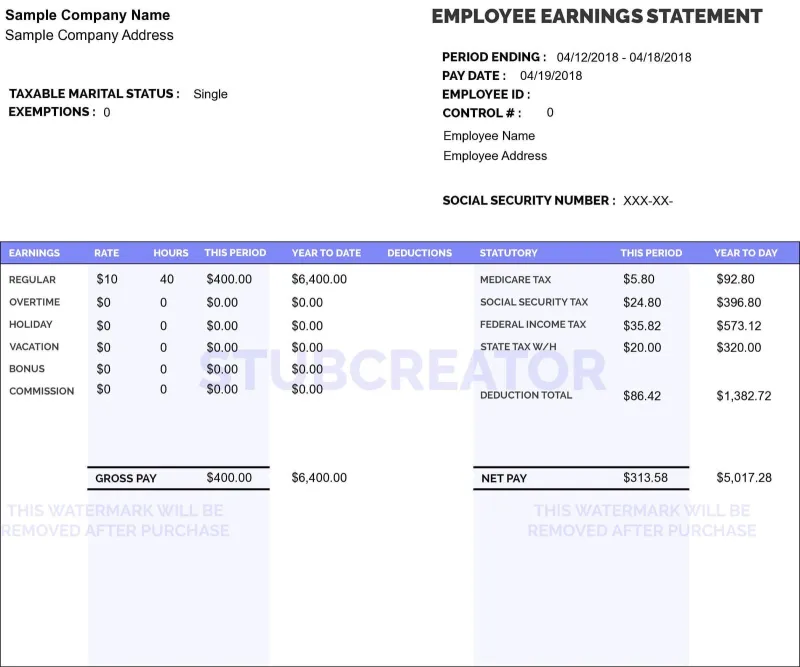
Photo: paycheck stub wages, via stubcreator.com
Picture a robbery: an armed holdup nets, on a good day, a few hundred dollars, and police descend within minutes. Now picture something quieter — a restaurant owner erasing 'off the clock' minutes, a warehouse manager shaving overtime, a construction contractor simply not paying the final invoice to a worker with no legal status and no leverage. Multiply that across the economy and you get a crime wave measured in the tens of billions of dollars a year, met with near-total institutional silence.
Researchers at the Economic Policy Institute have estimated that wage theft costs workers at least $15 billion annually — and that figure, based on survey data from just a handful of low-wage industries, is almost certainly a floor, not a ceiling. Some estimates run far higher. Compare that to all reported robberies, burglaries, and motor vehicle thefts combined — roughly $14-16 billion in losses in recent FBI data — and the scale becomes undeniable. Wage theft is plausibly the largest category of property crime in America, and virtually no one is arrested for it.
Impunity by Design
The asymmetry is not accidental. A worker whose paycheck bounces has to file a claim with a state labor department or the federal Department of Labor's Wage and Hour Division — agencies that have been chronically underfunded for decades. The Wage and Hour Division has fewer investigators today, relative to the size of the covered workforce, than it did at midcentury. Cases take months or years. Remedies, when they come, often amount to the employer paying what it owed anyway — a cost of doing business cheaper than compliance.
For the workers most likely to be victimized — immigrants, young workers, workers of color concentrated in low-wage sectors — the calculus is bleaker still. Retaliation is common and hard to prove. For undocumented workers, the threat of calling immigration authorities hangs over every complaint. The result, documented by researchers like Nikolas Theodore and Bernadette Rabuy, is a labor market where violation is rational and enforcement is a lottery.
The Counterargument, Taken Seriously
The business lobby's strongest argument deserves an honest hearing: most violations, they say, are honest mistakes born of genuinely complex wage-and-hour law — misclassification confusion, rounding errors, good-faith overtime disputes. There is truth in that. Compliance is complicated, and small businesses struggle with it.
But complexity does not explain the patterns. Studies consistently find violations concentrated in industries and business models — fast food franchising, construction subcontracting, gig platforms — where squeezing labor is the competitive strategy, not an accounting accident. An honest mistake is random. A business model is not. And the policy answer to complexity is simpler law and stronger enforcement, not weaker.
Enforcement That Actually Works
The good news is that we know what works, because some places are doing it. Seattle's Office of Labor Standards pairs enforcement with outreach in workers' languages. California's Labor Commissioner's Office can issue citations and liens, and the state has criminalized wage theft in serious cases. Chicago and other cities have used 'responsible bidder' ordinances to deny public contracts to serial violators. Community-based worker centers have pioneered wage recovery clinics that navigate claims workers cannot navigate alone. Where enforcement has teeth and workers have support, violations drop.
Why This Is the Front Line of Labor Rights
Wage theft is not a paperwork dispute — it is theft, and it is the foundation on which much of the low-wage economy is built. Every dollar stolen is a dollar transferred from the paycheck to the profit margin, from the family budget to the balance sheet. It suppresses wages industry-wide, punishing the honest employers too.
A serious progressive agenda would triple wage-and-hour investigator staffing, impose treble damages on violators, create criminal penalties for repeat offenders, protect undocumented workers who file claims, and make wage theft a lien on the business itself. Workers do not need sympathy. They need their money — and a legal system that treats the theft of labor with the same seriousness as the theft of property.