When Nobody Comes: The Collapse of Rural Volunteer Fire Departments and the Politicians Who Let It Happen
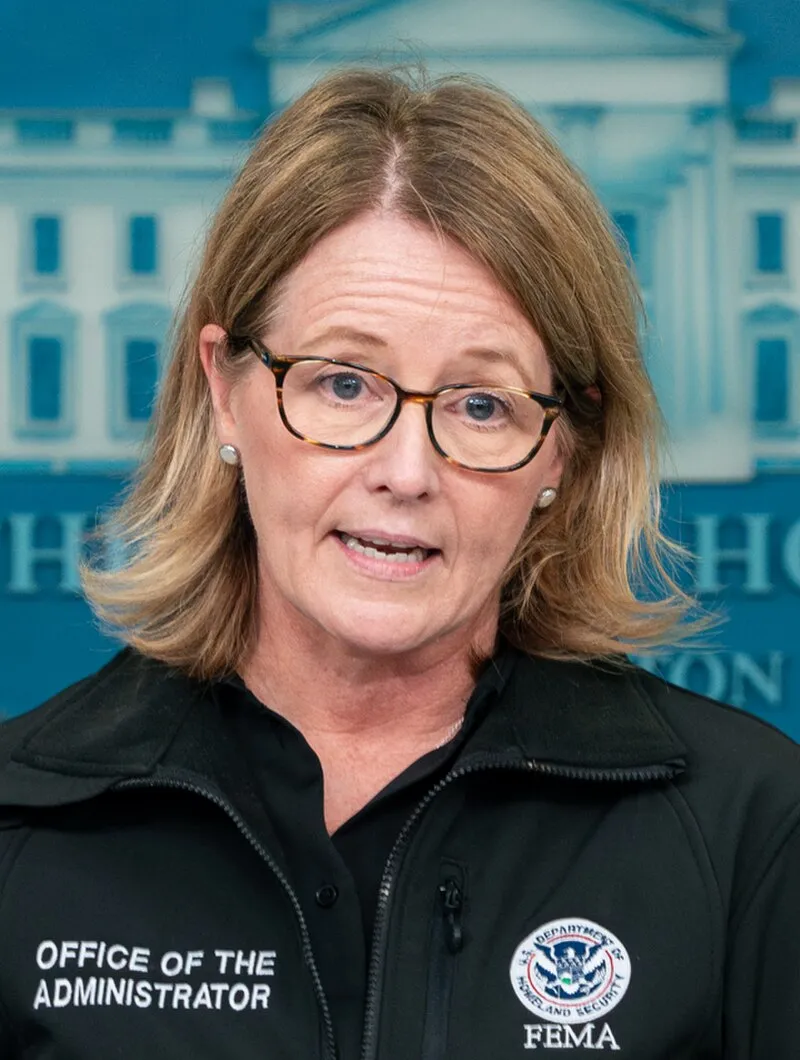
Photo of Deanne Criswell, via Wikimedia Commons
The Truck That Doesn't Come
In rural America, the distance between a working smoke detector and a functioning fire department can be the distance between a survivable emergency and a fatality. According to the National Fire Protection Association, volunteer firefighters protect approximately 68 percent of the United States by geographic area, serving communities where paid municipal departments are economically or logistically impossible. These departments — more than 19,000 of them — are the primary emergency response infrastructure for tens of millions of Americans. And they are collapsing.
The numbers are stark. The NFPA reports that the number of volunteer firefighters in the United States has fallen from approximately 897,750 in 1984 to around 676,900 as of its most recent data — a decline of roughly 25 percent over four decades, even as the U.S. population grew by more than 100 million people. The call volume those diminished departments face has not declined proportionally. It has increased, driven by an aging rural population with higher medical emergency rates, by the expansion of the wildland-urban interface, and by climate-related disasters — longer wildfire seasons, more severe flooding, more frequent and intense storms — that are hitting rural communities with particular force.
The result is a system under pressure it was never designed to absorb, staffed by a volunteer base that is aging out faster than it is being replaced, and funded at levels that would be considered inadequate for a mid-sized suburban parks department.
The Funding Gap Is Not an Accident
The federal government's primary mechanism for supporting volunteer and combination fire departments is the Assistance to Firefighters Grant program and the Staffing for Adequate Fire and Emergency Response grants, both administered by FEMA. In fiscal year 2023, the AFG program was funded at approximately $360 million. Distributed across thousands of eligible departments, that figure represents a meaningful but structurally insufficient contribution to a national emergency services infrastructure that the Congressional Research Service has estimated requires billions in annual investment to maintain baseline operational capacity.
The gap between what is needed and what is appropriated is not a secret. The U.S. Fire Administration has documented it. FEMA's own grant program administrators have testified to it. The International Association of Fire Chiefs has lobbied for increased funding consistently and with detailed supporting data. What has happened in response is a familiar Washington pattern: bipartisan acknowledgment of the problem paired with bipartisan failure to fund the solution at the scale the problem requires.
But the failure is not evenly distributed. The legislators most likely to vote against emergency services funding increases, against expanded FEMA grant programs, and against the broader federal discretionary spending that supports rural infrastructure are disproportionately the same legislators who campaign on being the authentic voice of rural America. The political contradiction is breathtaking in its audacity: running on the identity of rural communities while systematically defunding the institutions those communities depend on to survive.
Response Times and the Rural Penalty
The consequences of this funding collapse are measurable in minutes. The NFPA standard for fire department response — the benchmark used for urban and suburban departments — calls for the first engine to arrive within four minutes of dispatch in 90 percent of calls. Rural volunteer departments, operating with on-call volunteers who must travel from their homes or workplaces to the station before responding, routinely face response times of 10, 15, or 20 minutes or more.
A 2020 analysis by researchers at the University of North Carolina found that rural fire fatality rates are approximately twice those of urban areas, a disparity that cannot be fully explained by building stock or population density — but that correlates strongly with response time differentials. For structure fires, every minute of delay after ignition significantly increases both property loss and the probability of civilian fatality. The rural response time penalty is not an abstraction. It is a measurable, preventable contributor to preventable deaths.
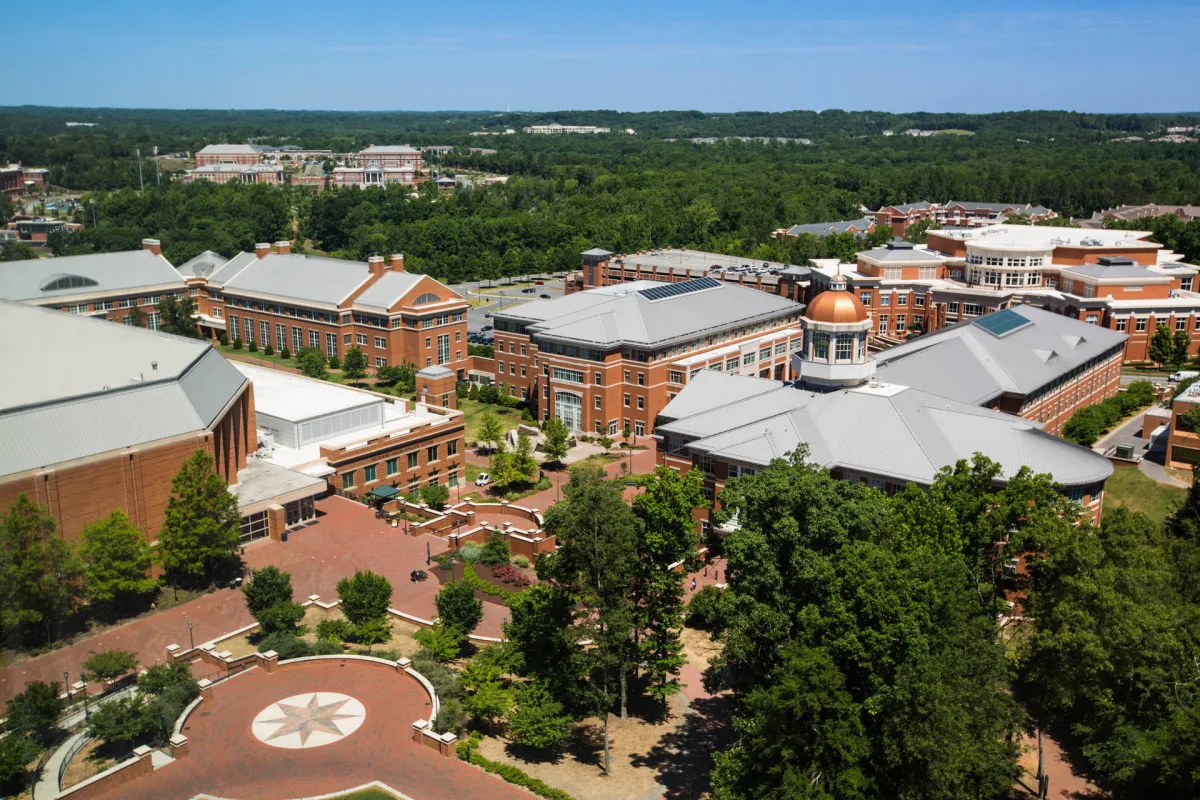 Photo: University of North Carolina, via wallpapers.com
The per-capita spending disparity reinforces the point. Urban fire departments in major metropolitan areas spend between $200 and $400 per resident annually on fire protection, supported by property tax bases, municipal budgets, and in many cases labor contracts that mandate minimum staffing levels. Rural volunteer departments often operate on annual budgets of $50,000 to $150,000 — supported by bingo nights, pancake breakfasts, and equipment drives — serving geographies that may encompass hundreds of square miles.
Climate Change Is Accelerating the Crisis
The volunteer fire crisis did not emerge in isolation. It is being actively worsened by the same climate dynamics that rural Republican lawmakers have most consistently refused to acknowledge or address. The wildland-urban interface — the zone where developed land meets undeveloped vegetation — has expanded dramatically as rural populations have spread into previously undeveloped areas. The USDA Forest Service estimates that approximately 46 million homes now sit within or adjacent to the wildland-urban interface, the majority of them in areas served by volunteer departments.
The 2023 wildfire season was the most destructive in Canadian history and produced smoke events that affected air quality across the continental United States. The 2024 fire season brought devastating losses in California, Texas, and across the interior West. Each of these events placed extraordinary demands on volunteer departments — extended operational periods, mutual aid requests, equipment needs that far exceeded what bingo fundraisers can supply — while simultaneously reinforcing the need for the kind of federal climate resilience investment that has been reliably blocked by the same political coalition that claims to speak for rural communities.
The strongest version of the opposing argument is that volunteer fire departments are a community institution, and that federal funding dependence risks eroding the civic culture of voluntarism that makes them function. There is genuine value in this concern. Voluntarism is not just a cost-saving mechanism — it is a form of community cohesion, and heavy-handed federal involvement can sometimes undermine local ownership. But this argument becomes a rationalization when it is deployed to justify funding levels that are objectively insufficient to maintain basic operational capacity. Honoring the tradition of voluntarism does not require letting volunteers operate with 30-year-old equipment, no stipends for their time, and no recruitment pipeline for the next generation.
The People Left Waiting
The demographics of who lives in rural America — and who therefore depends on volunteer fire departments — complicate any narrative about this being a low-stakes policy backwater. Rural communities skew older, with higher rates of disability and chronic illness that increase the likelihood of medical emergencies requiring fire department response. They skew lower-income, with less capacity to absorb property losses from fires that arrive late to contain. And they are, in many states, the communities that deliver the most reliable electoral margins for the very politicians whose budget priorities are leaving them exposed.
This is not a coincidence that should go unremarked. It is a political economy in which rural voters are mobilized through cultural signaling — guns, faith, anti-elitism — while the material infrastructure of their daily safety is allowed to atrophy. The gap between the rhetoric of rural champions and the reality of rural fire department budgets is a gap that costs lives.
Federal investment in volunteer fire department support, training, equipment, and recruitment is not a progressive luxury. It is a baseline obligation of governance to the communities that have been most systematically underserved by the infrastructure decisions of the past half-century.
A government that sends billions abroad to defend other nations' borders while letting its own rural first responders fundraise their way through wildfire season has its priorities not merely misaligned, but morally inverted.