Captive Patients, Captive Markets: How Two Corporations Turned Kidney Failure Into a Lifetime Revenue Stream

A Monopoly Built on Medical Necessity
There is a particular kind of market power that only emerges when the product being sold is survival itself. DaVita Inc. and Fresenius Medical Care together operate more than 70% of all dialysis clinics in the United States, according to data from the U.S. Renal Data System. For the approximately 800,000 Americans living with end-stage renal disease — a condition that is fatal without regular treatment — this is not an abstract antitrust concern. It is the geography of their lives. Three times a week, for three to five hours per session, these patients are tethered to machines at facilities where, in most American cities and rural counties alike, meaningful competition simply does not exist.
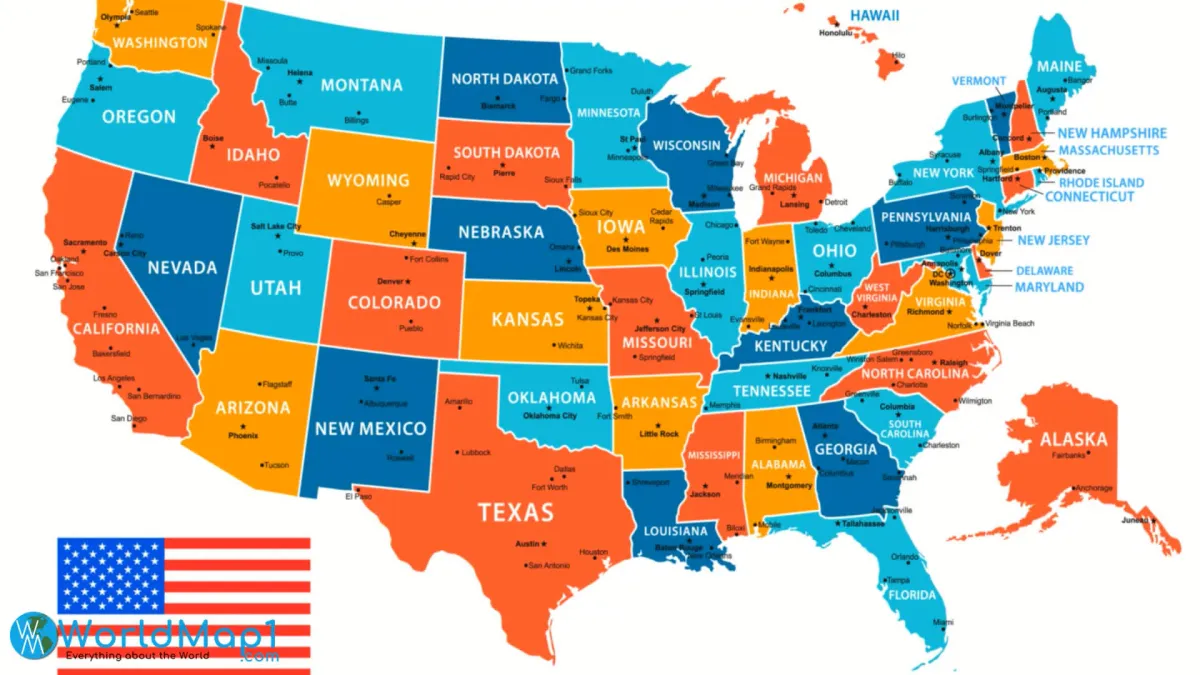 Photo: United States, via www.worldmap1.com
This is not an accident. It is the compounded result of decades of permissive merger review, aggressive lobbying, and a Medicare reimbursement structure that, however unintentionally, became the financial foundation of a duopoly. And the human cost of that arrangement — measured in suppressed alternatives, reduced access to transplants, and a systematic disincentive to move patients toward independence — is one of the most consequential and underreported stories in American healthcare policy.
How the Business Model Works — and Why It Stays That Way
Medicare pays for dialysis treatment for nearly all end-stage renal disease patients regardless of age, one of the few conditions granted this universal federal coverage under a 1972 amendment to the Social Security Act. That guarantee created a stable, government-backed revenue stream — and DaVita and Fresenius moved decisively to capture it. Both companies have grown primarily through acquisition, absorbing independent clinics and smaller regional chains over two decades of largely unchallenged consolidation. The result is a market where, according to a 2019 analysis published in the Journal of the American Society of Nephrology, patients in many regions have no realistic alternative provider within a reasonable distance.
The financial incentives embedded in the in-center dialysis model are worth examining closely. A patient receiving in-center hemodialysis three times per week generates, on average, somewhere between $80,000 and $90,000 in annual Medicare reimbursements, according to estimates from the Medicare Payment Advisory Commission (MedPAC). Home dialysis — which clinical evidence suggests produces comparable or superior outcomes for many patients and is substantially cheaper per treatment — represents a direct threat to that revenue base. So does kidney transplantation, which, if successful, removes a patient from the dialysis revenue stream entirely.
Both companies have spent millions lobbying Congress and federal agencies. A 2019 Washington Post investigation documented how DaVita and Fresenius funded patient advocacy groups and charity organizations that then lobbied against policies favorable to home dialysis expansion and transplant access. In 2019, the Trump administration issued an executive order directing federal agencies to promote home dialysis and transplantation. The industry's response was instructive: both companies publicly endorsed the goals while their lobbying arms worked to shape implementation in ways that preserved their in-center dominance.
The Patient Who Cannot Walk Away
The concept of market competition assumes a consumer who can choose, delay, or walk away. Dialysis patients can do none of these things. Miss a session and you risk fluid overload, cardiac arrest, or death. This is not a market — it is a captive population, and treating it as anything else is a category error that has been enormously profitable for two corporations and enormously costly for everyone else.
The demographics of end-stage renal disease are not evenly distributed. Black Americans develop kidney failure at roughly three times the rate of white Americans, a disparity driven by higher rates of diabetes and hypertension that are themselves products of structural inequality, food insecurity, and inadequate preventive care access. Indigenous Americans and Hispanic Americans face similarly elevated rates. In other words, the patients most thoroughly subject to this duopoly's market power are disproportionately the same communities that have faced systematic disinvestment from the American healthcare system for generations.
For these patients, the practical consequences of consolidated, profit-driven care include longer wait times, higher rates of hospitalization, and documented disparities in access to transplant referrals. A 2020 study in JAMA Internal Medicine found that patients at for-profit dialysis facilities had lower rates of transplant waitlisting compared to those at nonprofit facilities — a finding consistent with the structural logic of a business model that benefits from keeping patients in chairs.
The Strongest Case for the Other Side
Defenders of the current structure make several arguments worth engaging seriously. First, they note that DaVita and Fresenius have invested heavily in clinic infrastructure across underserved rural and urban communities where no other provider would operate — a genuine point. Second, they argue that the Medicare bundled payment system introduced in 2011 actually improved care quality by incentivizing efficiency. Third, they contend that home dialysis expansion requires patient training and support infrastructure that the large chains are better positioned to provide than smaller competitors.
These are not trivial observations. But they do not justify the absence of competition, the suppression of alternatives, or the structural incentive to maximize in-center volume. A healthcare system that relies on the goodwill of near-monopoly corporations to serve vulnerable populations is not a system — it is a dependency. The argument that consolidation enables investment in underserved areas is, at its core, an argument for accepting the terms of capture rather than building something better.
What Reform Would Actually Look Like
The policy toolkit here is well-established, even if the political will to deploy it has been scarce. Aggressive antitrust enforcement — including blocking future acquisitions and potentially unwinding past mergers — would be a starting point. The Biden administration's Federal Trade Commission under Lina Khan signaled renewed interest in healthcare market concentration, but dialysis specifically remained underaddressed. The incoming administration has given no indication that antitrust enforcement in healthcare is a priority.
Beyond antitrust, Medicare reimbursement reform that substantially increases payment rates for home dialysis modalities would shift the financial calculus for providers. Mandatory transplant referral timelines, stronger nonprofit clinic support, and direct federal investment in home dialysis training infrastructure would all reduce the structural dependency on the duopoly's in-center model. Advocates for Medicare for All argue, credibly, that removing the profit motive from renal care entirely is the only way to fully realign incentives toward patient outcomes rather than patient retention.
None of these reforms are exotic. Several have been proposed in various legislative vehicles over the past decade. What they share is a common enemy: two corporations with enormous lobbying budgets, a captive revenue stream, and every financial reason to ensure that the status quo persists.
The Blueshift Verdict
When the price of inaction is measured in the lives of 800,000 Americans — disproportionately Black, brown, and poor — who have no choice but to keep showing up, the question of whether we break up this duopoly is not a policy nuance. It is a moral reckoning we have been deferring for far too long.