Gavel for the Rich, Gamble for the Rest: How Underfunded Public Defense Betrays the Sixth Amendment
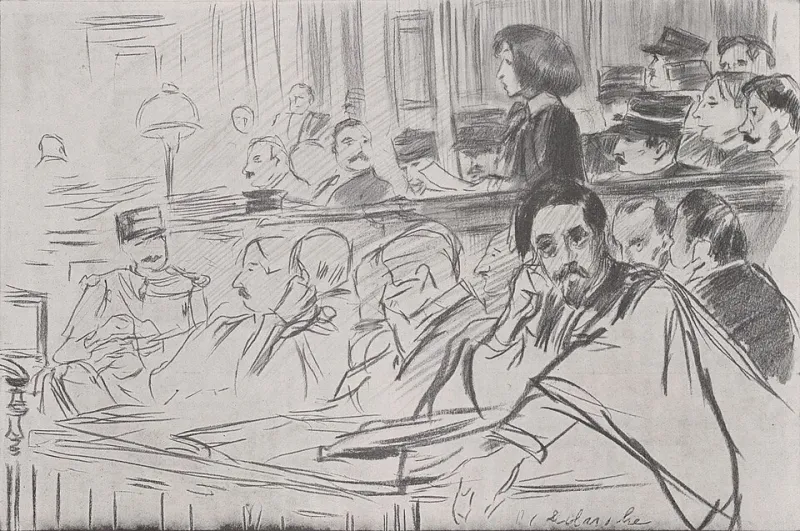
Photo: Paul Charles Delaroche, Public domain, via Wikimedia Commons
In 1963, the Supreme Court's unanimous ruling in Gideon v. Wainwright enshrined one of the most fundamental principles in American jurisprudence: that the state must provide legal counsel to any criminal defendant who cannot afford one. It was a watershed moment, celebrated as proof that the Constitution's protections extended to the poor as surely as they did to the wealthy. Sixty years later, that promise has been hollowed out by decades of deliberate underfunding, political indifference, and a quiet bipartisan consensus that the legal rights of low-income Americans are an acceptable budget line to cut.
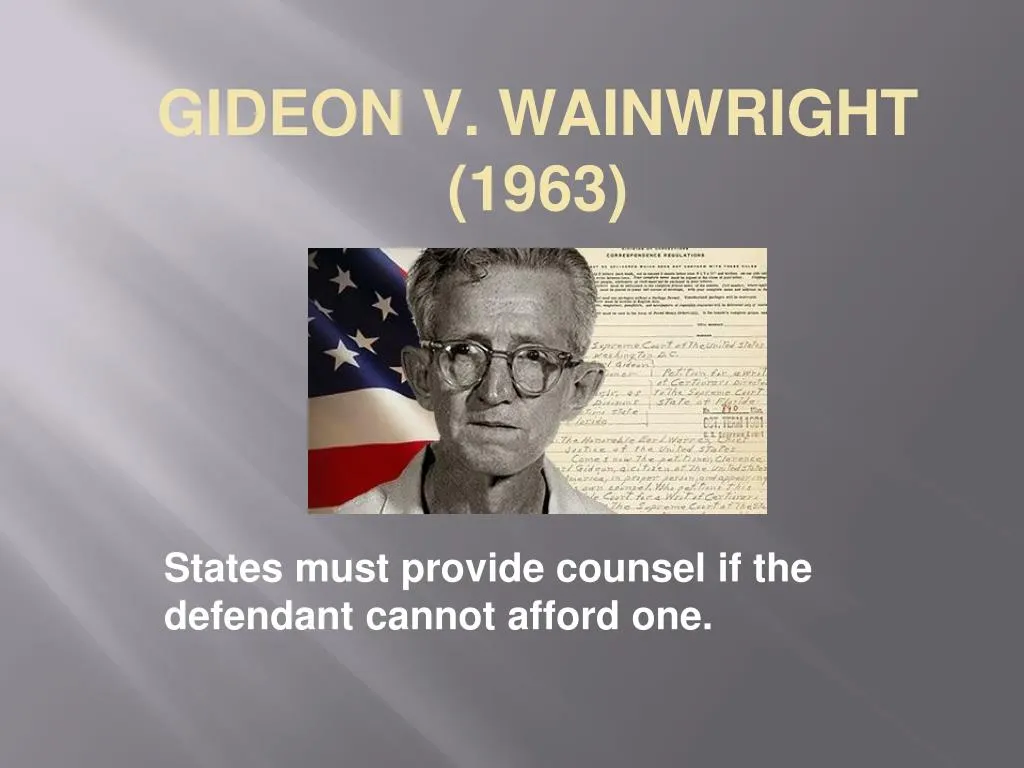 Photo: Gideon v. Wainwright, via image3.slideserve.com
The result is a two-tiered justice system operating in plain sight — one in which a defendant's fate is shaped less by the merits of their case than by the accident of their geography and the depth of their pockets.
The Caseload Crisis Nobody Wants to Fix
The numbers are not ambiguous. The American Bar Association recommends that public defenders handle no more than 150 felony cases or 400 misdemeanor cases per year. In practice, those limits are treated as aspirational fiction. A 2022 report from the Brennan Center for Justice found public defenders in many jurisdictions carrying between 500 and 1,000 cases annually — three to seven times the recommended ceiling. In New Orleans, public defenders have at times been assigned more than 19,000 cases per attorney per year across a career span. In Missouri, some rural defenders handle hundreds of felonies simultaneously with virtually no investigative support staff.
 Photo: New Orleans, via c8.alamy.com
These are not isolated failures. They are the predictable outcomes of a funding model that leaves public defense almost entirely dependent on county and state budgets — budgets that are perpetually squeezed, and where prosecutors' offices routinely receive two to three times the per-case funding that defense offices do. A 2019 study published in the Journal of Political Economy found that public defenders with excessive caseloads secured outcomes that were, on average, significantly worse for their clients than those achieved by even modestly better-resourced counsel. The gap was not marginal. It was the difference between prison time and probation, between a felony record and a dismissal.
The Plea Deal Assembly Line
The most corrosive consequence of this dysfunction is the mass production of plea agreements under conditions that cannot reasonably be called voluntary. When a public defender has 600 open cases and fifteen minutes to spend with a client before arraignment, the calculus becomes brutally simple: accept a plea, move on, survive the docket. Defense attorneys in this position are not practicing law. They are processing human beings.
According to the National Registry of Exonerations, more than 30 percent of documented wrongful convictions involved defendants who had pleaded guilty — many of them coerced not by prosecutorial misconduct but by the sheer impossibility of mounting a real defense. Innocent people plead guilty every day in America, not because they believe the system will fail them, but because they have already watched it do exactly that. They take two years over the risk of ten.
For communities of color, this dynamic compounds an already devastating racial disparity. Black Americans are overrepresented at every stage of the criminal legal system and are disproportionately reliant on public defenders. When that system is broken, the burden falls heaviest on those who were already most vulnerable to it.
What Other Democracies Actually Do
The United States' approach to public defense is not inevitable — it is a choice, and a peculiar one by international standards. England and Wales fund a national Legal Aid Agency that provides centralized, quality-controlled defense representation with enforceable caseload standards and independent oversight. Scotland's publicly funded system is similarly structured around national accountability rather than the whims of county commissioners. Canada's Legal Aid programs, though imperfect and underfunded in some provinces, operate under federal frameworks that establish minimum standards across the country.
In none of these systems is the quality of your criminal defense primarily a function of which county you happen to be arrested in. That is an American exceptionalism worth being ashamed of.
The Strongest Counter-Argument — and Why It Fails
Conservatives and fiscal moderates typically respond to this critique with a version of the following: the criminal justice system is already expensive, public budgets are constrained, and defendants who cannot afford counsel are often guilty of the crimes charged. The strongest version of this argument concedes the caseload problem but frames it as a resource allocation challenge rather than a structural injustice.
This framing fails on its own terms. The downstream costs of wrongful convictions — incarceration expenses, civil litigation, lost productivity, destroyed families — far exceed the upfront investment in adequate defense. The RAND Corporation and the Urban Institute have both produced research suggesting that reducing wrongful convictions and over-incarceration through better legal representation would generate substantial long-term savings for the public. Beyond the fiscal logic, there is a constitutional one: the Sixth Amendment does not include a budget exemption. A right that evaporates when the county runs short of funds is not a right. It is a suggestion.
Who Bears the Cost
The human arithmetic of this failure is not abstract. It is the 22-year-old in Memphis who pleads guilty to a drug charge he might have beaten, and loses his eligibility for federal student aid. It is the undocumented worker in Texas whose overworked attorney misses a deportation consequence buried in a plea agreement. It is the Black teenager in rural Georgia whose public defender, managing 400 other cases, never interviews a single witness before trial. These are not hypotheticals drawn from advocacy literature. They are documented patterns, repeated across thousands of courtrooms every year in every state in the union.
The communities most affected are, predictably, those with the least political power: low-income Americans, Black and Latino defendants, rural communities, and people experiencing homelessness or mental illness. These are not constituencies that send large checks to legislative campaigns. Their suffering is structurally invisible to the people with the power to end it.
What Reform Looks Like
Solutions exist and are not mysterious. Federal minimum standards for public defender caseloads, tied to federal criminal justice funding, would create enforceable accountability. A national public defense fund — modeled on the Legal Services Corporation but structured for criminal defense — could supplement state and county budgets in the most under-resourced jurisdictions. Independent oversight bodies, insulated from the political pressures that currently allow county commissioners to defund public defense with impunity, would provide structural accountability. Several states, including Colorado and New York, have begun moving toward statewide funding models that reduce the county-by-county lottery effect. These reforms are achievable. They are not being pursued because the political will to protect poor defendants has never materialized in a system that was not designed with their interests in mind.
The Verdict the System Won't Deliver
The Sixth Amendment was written as a guarantee, not a guideline. Every year that Congress and state legislatures decline to fund it adequately, they are not merely making a budgetary decision — they are making a moral one. They are deciding that the constitutional rights of poor Americans are worth less than a balanced county budget, that the integrity of criminal verdicts matters less than the convenience of prosecutors' dockets, and that justice is, in the end, a commodity available primarily to those who can afford it.
A democracy that rations constitutional rights by zip code is not living up to its name — and no amount of courtroom pageantry can disguise the coin flip happening behind the scenes.