The Precinct-Level Putsch: Election Deniers Are Quietly Seizing the Machinery of American Democracy

The Infrastructure Nobody Is Watching
American elections are not administered by the federal government. They are not even primarily administered by states. They are administered, in their operational reality, by a decentralized network of roughly 10,000 local jurisdictions — county clerks, boards of elections, canvassing boards, precinct captains, and poll workers — whose decisions about voter roll maintenance, ballot adjudication, certification timelines, and polling place access shape the practical experience of democratic participation for every American voter.
This decentralization is both a historical accident and, in theory, a safeguard: no single point of failure can compromise an entire national election. But it is also a structural vulnerability that a coordinated movement has spent the past four years learning to exploit.
Since the 2020 election, a network of organizations — including the Election Integrity Network, affiliated with former Trump adviser Cleta Mitchell, and the precinct strategy promoted by conservative activist Dan Schultz — has worked systematically to recruit, train, and place election skeptics into the local administrative roles that most voters have never heard of and most journalists rarely cover. The results of that effort are now visible in county after county across the swing states that will determine the next presidential election.
Georgia, Arizona, Wisconsin: The Ground Truth
In Cochise County, Arizona, the board of supervisors — dominated by Republicans who had questioned the 2020 results — refused to certify the November 2022 midterm election results by the statutory deadline, a decision that a state court ultimately ordered reversed. The episode was not a rogue act. It was a preview: a demonstration that local officials are willing to use the certification process as a political instrument, and that the legal remedies available are slow, expensive, and dependent on courts that may not always intervene in time.
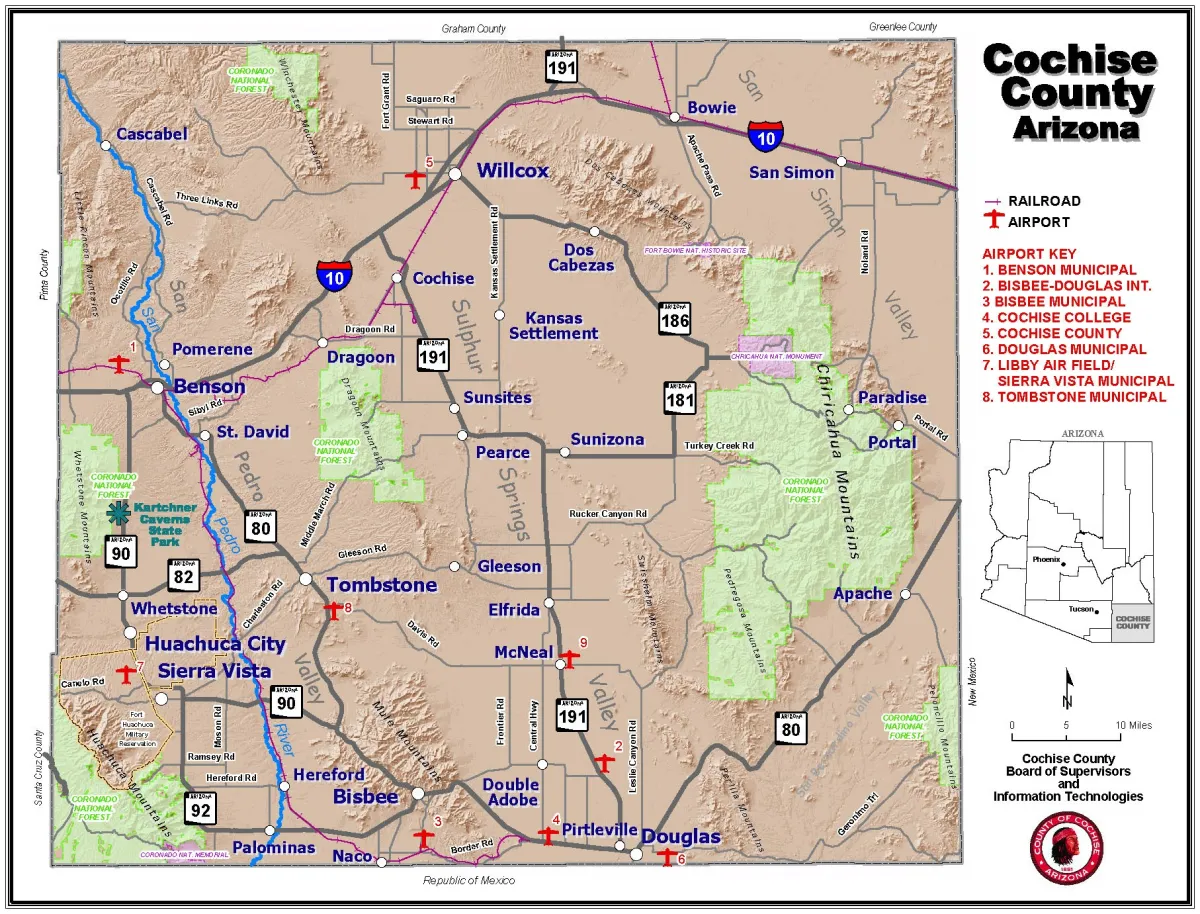 Photo: Cochise County, Arizona, via www.bisbeeaz85603.com
In Wisconsin, the conservative-dominated Wisconsin Supreme Court ruled in 2022 that most absentee ballot drop boxes — widely used during the pandemic and disproportionately relied upon by urban and elderly voters — were illegal under state law. The decision was reversed after liberal justices retook the court's majority in 2023, but the episode illustrated how state-level judicial appointments interact with local election administration to create compounding vulnerability.
In Georgia, reporting by ProPublica and the Atlanta Journal-Constitution documented how the State Election Board — reconstituted under legislation passed in the wake of 2020 — gained new powers to investigate and potentially remove local election officials, a change critics argued was designed to provide a mechanism for overriding certification decisions in counties with large Democratic electorates. Three of the board's members appointed under that legislation had publicly promoted election fraud claims.
The Precinct Strategy Is Real and It Is Working
The precinct captain model deserves particular attention because it operates largely below the threshold of public scrutiny. Precinct captains — the lowest rung of official party infrastructure — have historically been a largely ceremonial role in many jurisdictions. In the strategy articulated by Schultz and amplified across conservative media, they become something more: a presence inside the administrative apparatus of elections, with standing to observe, challenge, and in some states formally object to various aspects of the process.
Reporting by Reuters and Rolling Stone in 2021 and 2022 documented how the strategy had gained traction in Republican Party committees across Arizona, Michigan, Pennsylvania, and Nevada, with thousands of new precinct captain slots filled by individuals who had been recruited specifically through election integrity networks. Many had no prior involvement in party politics. Their shared credential was skepticism about 2020.
The significance is not that any individual precinct captain can overturn an election. It is that a network of such individuals, operating within the formal structures of election administration, can create friction, generate legal challenges, delay certification, and — in the most extreme scenarios — provide the political cover for higher-level officials to take extraordinary action.
The Strongest Case for the Other Side
Conservatives pushing this strategy argue, not without some basis, that civic participation at the local level is inherently legitimate, that both parties recruit poll workers and precinct officials, and that election integrity concerns — whatever their origin — are best addressed through greater citizen involvement rather than less. They are correct that local election administration has historically been underfunded, understaffed, and under-scrutinized.
The distinction that matters, however, is between citizens engaging with election administration in good faith — accepting results, working within legal frameworks, training to administer elections accurately — and citizens being recruited specifically to challenge, delay, or refuse to certify results that do not favor their preferred candidate. The former is democracy functioning as intended. The latter is its systematic subversion, dressed in the language of participation.
What Decentralization Actually Means
The United States' decentralized election system was not designed with the assumption that large numbers of local officials would refuse to perform their statutory duties. It was designed with the assumption of good-faith administration, backstopped by judicial review. When that assumption breaks down at scale — when hundreds of local officials in contested jurisdictions are recruited for the explicit purpose of challenging results — the backstop is tested in ways it was never built to handle.
The Brennan Center for Justice has documented a significant increase in threats and harassment directed at local election officials since 2020, a trend that has driven experienced administrators out of the field and made recruitment of qualified replacements more difficult. The officials most likely to stay, or to seek these roles for the first time, are those most motivated by political mission rather than administrative vocation. That selection effect is not neutral.
The Democratic Stakes in Your Zip Code
The 2024 election cycle produced its own set of local flash points — certification disputes, canvassing board walkouts, and legal challenges that, while ultimately resolved, required significant legal and organizational resources to counter. The 2026 midterms and the 2028 presidential election will unfold in an administrative landscape shaped by the appointments being made right now.
Progressive and nonpartisan election protection organizations — including the Election Protection Coalition, All Voting Is Local, and state-level groups in Georgia, Arizona, and Wisconsin — have begun building infrastructure to monitor local administrative appointments and respond to certification crises. That work is essential and chronically underfunded.
But the deeper solution is political: electing secretaries of state, attorneys general, and state legislators who will enforce certification timelines, protect local officials from political pressure, and close the statutory ambiguities that have been exploited to manufacture delay. In Wisconsin, the 2023 state Supreme Court election — decided by roughly 200,000 votes — was, among other things, a referendum on the legal architecture of election administration. It was won. The next one may not be.
Democracy does not fail all at once, in a single dramatic rupture — it is dismantled incrementally, in county offices and canvassing rooms, by people who have decided that the right outcome matters more than the legitimate process, and the only adequate response is to be present, organized, and paying attention at every level where that dismantling is being attempted.