Vouchers, Values, and the Vanishing Public School: The Billionaire Blueprint to Privatize American Education
The Check in the Mail — and Where It Goes
In Arizona, a family can now receive up to $7,000 per child per year in public tax dollars through the state's Empowerment Scholarship Account program — money they can spend on private school tuition, homeschool curriculum, tutoring, or a range of other education-related expenses. There is no requirement that the school receiving the funds be accredited. There is no requirement that it employ certified teachers. There is no requirement that it admit students regardless of disability, sexual orientation, or religious background. There is, in practice, almost no accountability at all.
Arizona's program, which became universal in 2022 under Governor Doug Ducey, is the most expansive in the country — but it is no longer exceptional. According to EdChoice, a school choice advocacy organization, more than 30 states now operate some form of private school choice program, and a wave of legislation passed between 2021 and 2024 has dramatically expanded eligibility, funding levels, and the range of expenses covered. In Florida, Iowa, Indiana, and Ohio, programs that were once targeted at low-income students or children with disabilities have been converted into universal entitlements available to families at any income level — including those already enrolled in private school.
The result is a transfer of public education funding on a scale that would have been politically unimaginable a decade ago.
The Architecture of a Long Game
The intellectual and financial infrastructure behind the school choice movement was not built overnight. It stretches back to Milton Friedman's 1955 essay proposing education vouchers, runs through the Heritage Foundation's policy apparatus, and was bankrolled for decades by a network of conservative and libertarian donors for whom public education represented both a philosophical affront and a practical obstacle.
No family has invested more visibly in this project than the DeVos family of Michigan, whose America's Children, American Children political action committees, along with affiliated organizations, have contributed hundreds of millions of dollars to school choice advocacy, candidate support, and lobbying over the past three decades. Betsy DeVos's tenure as Secretary of Education under the first Trump administration transformed that long-term investment into federal policy posture, even as Congress declined to pass a federal voucher program.
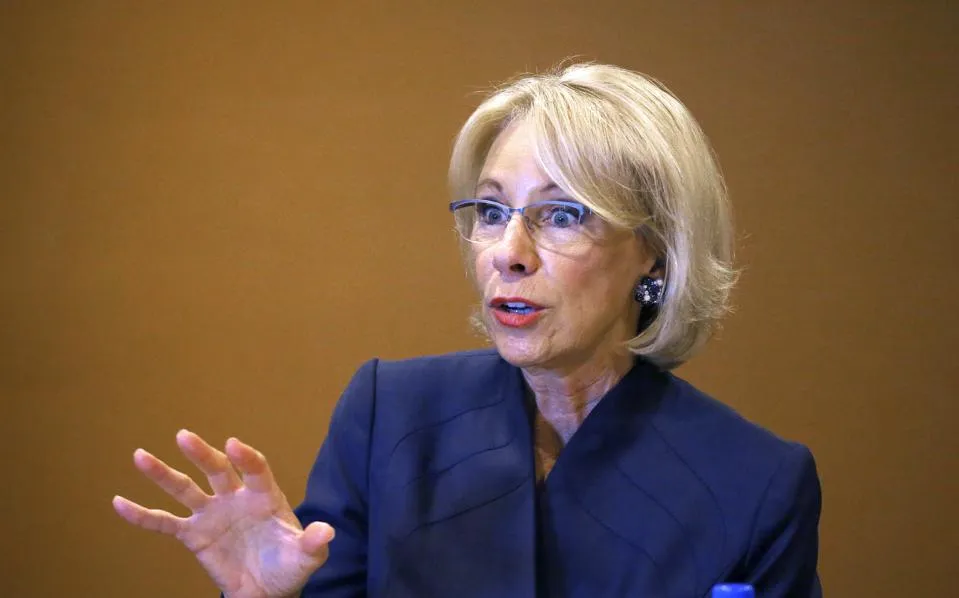 Photo: Betsy DeVos, via specials-images.forbesimg.com
The real legislative breakthroughs came at the state level, where well-funded advocacy organizations worked systematically to elect sympathetic legislators, draft model legislation, and reframe the debate around parental rights — a framing that proved politically potent and largely resistant to the empirical arguments against voucher programs.
The Supreme Court Opened the Door
The constitutional scaffolding that once limited the reach of voucher programs — specifically, the Establishment Clause's prohibition on using public funds to support religious institutions — was substantially dismantled by the Supreme Court in a series of rulings culminating in Carson v. Makin (2022), in which the Court held, 6-3, that Maine's exclusion of religious schools from its tuition assistance program violated the Free Exercise Clause.
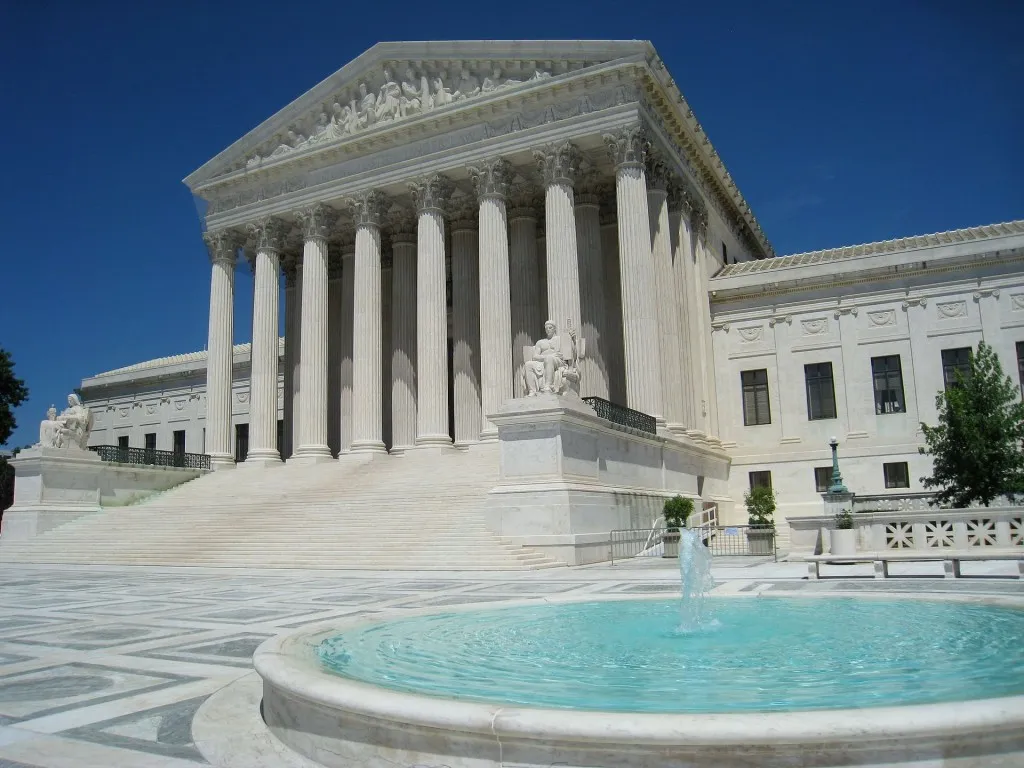 Photo: Supreme Court, via www.newyorkappellatelawyer.com
Writing for the majority, Chief Justice John Roberts extended the logic of Espinoza v. Montana Department of Revenue (2020) to reach what Justice Sonia Sotomayor, in dissent, described as a conclusion that the Constitution now affirmatively requires states to fund religious education. The practical effect is that voucher programs which include religious schools are not merely permissible — in states with such programs, excluding religious schools may now be constitutionally prohibited.
This is not a neutral development. Religious schools that receive voucher funds in Florida, Indiana, and elsewhere maintain explicit policies permitting the exclusion of LGBTQ+ students and staff, the denial of services to students with certain disabilities, and the teaching of curricula that contradict established science on evolution and climate change. Public money is now flowing to institutions that would be in violation of federal civil rights law if they were public schools.
The Evidence Problem
Proponents of voucher programs argue that competition improves educational outcomes, that parents — not governments — are best positioned to determine what education their children need, and that low-income families deserve the same access to school choice that wealthy families exercise through residential sorting. These are not frivolous arguments, and the parental rights framing resonates genuinely with families who feel underserved by their local public schools.
But the evidence base for voucher programs' academic effectiveness is, at best, mixed. A 2023 analysis by Stanford University's Center for Research on Education Outcomes found no consistent positive effect on student achievement from private school choice programs, and several studies — including evaluations of Louisiana's and Indiana's voucher programs — found negative effects on math achievement in the years immediately following a student's transition to a private school.
More fundamentally, the competition argument assumes a functioning market in which schools respond to enrollment incentives by improving quality. In rural areas with limited private school options, and in programs with minimal accountability requirements, that market does not exist. What exists instead is a transfer of public funds to private institutions with no mechanism for ensuring those funds produce educational benefit.
Who Pays and Who Gains
The beneficiaries of universal voucher programs are not primarily the low-income families the movement originally claimed to champion. An analysis of Arizona's ESA program by the Grand Canyon Institute found that the majority of early applicants came from households with above-median incomes, and that a significant share were families already enrolled in private school — meaning the program functioned largely as a subsidy for families who had already opted out of the public system.
The losers are concentrated in the public school districts that lose per-pupil funding with each departing student but retain the fixed costs — facilities, transportation, special education services — that do not scale proportionally with enrollment. In rural Arizona districts, the funding losses from the ESA program have already forced reductions in staff, extracurricular programs, and instructional days.
The students most harmed are those who cannot or do not leave: children with complex disabilities whose needs private schools are not equipped or required to meet, students in communities without viable private alternatives, and the majority of students who remain in a public system being systematically starved of resources.
What This Signals
The school choice movement's success is not primarily an education story. It is a story about the deliberate erosion of a public institution that, for all its failures, represents one of the last arenas in American civic life where children from different economic backgrounds are, in principle, educated together under a common set of democratic obligations. The replacement being built in its place is a fragmented, stratified, and largely unaccountable market in which public funds flow to institutions that answer to no one but their own governing boards.
The 2024 and 2026 election cycles will feature school board races and state legislative contests in which these programs — their expansion, their accountability structures, and their constitutionality — will be central. The progressive coalition has been slow to respond with a counter-narrative as politically effective as parental rights. It needs one.
Public education is not a government program competing for market share — it is a democratic commitment, and every dollar diverted from it without accountability is a vote for a future in which that commitment no longer exists.